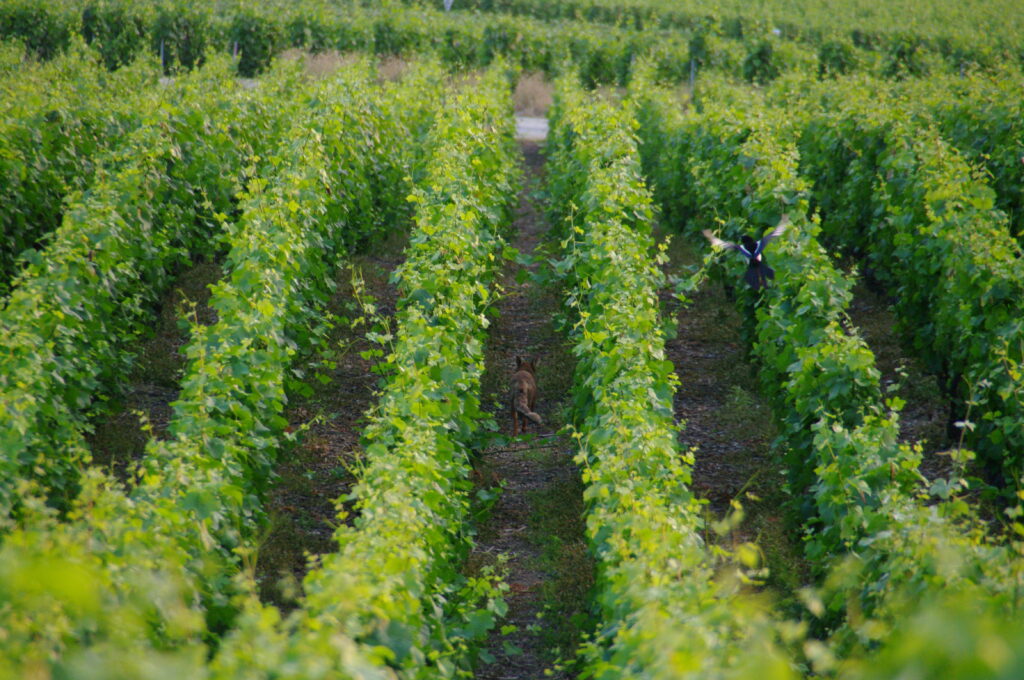
The cultivation of our vines
Some may consider us “dinosaurs”, others purists – you decide – but we are one of the last wine estates to do everything from start to finish, starting with bare land. We plant our own vines, cultivate them and produce our own wine, without calling on any service providers or outside help.
At the birth of our future vines
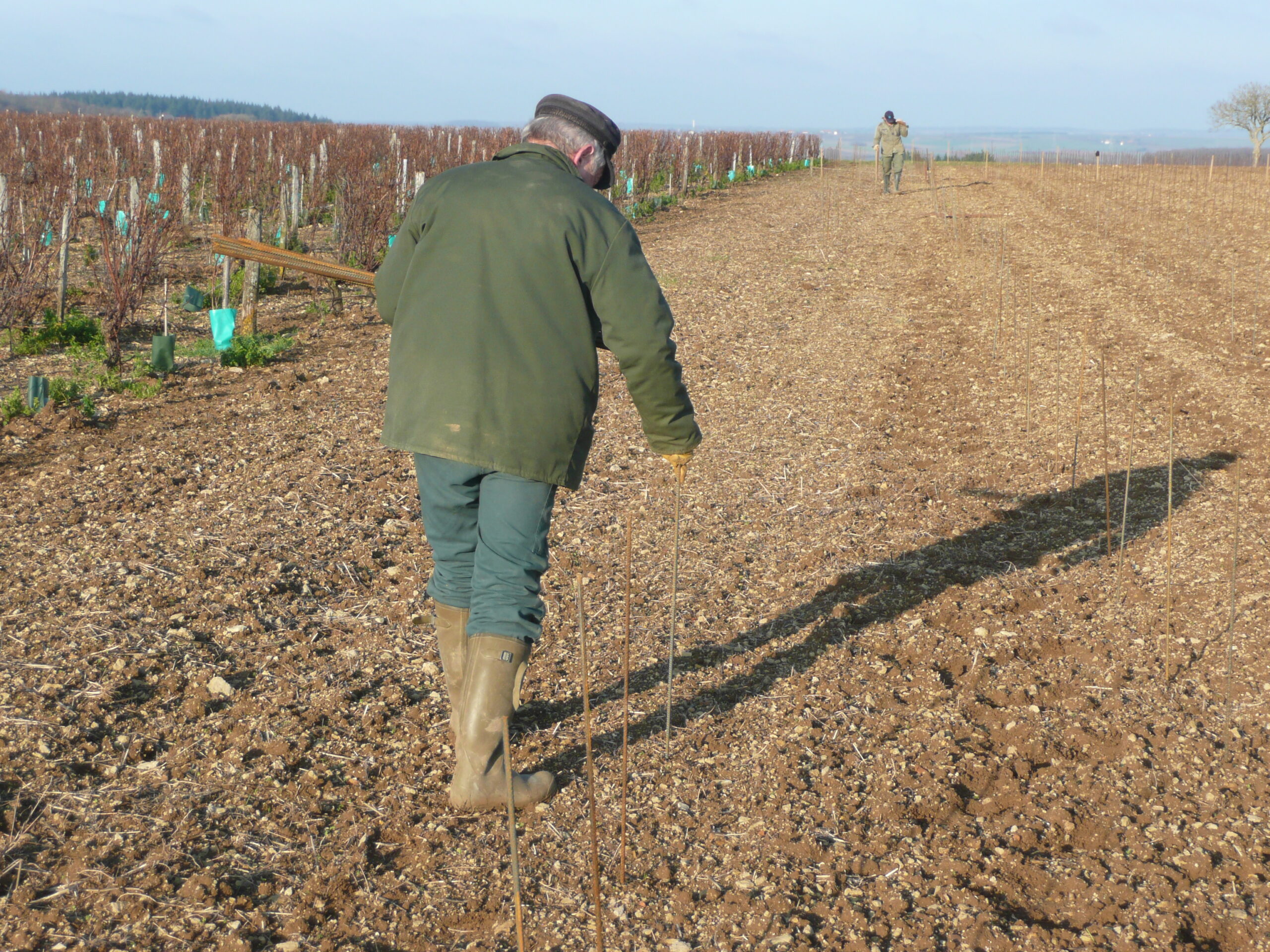
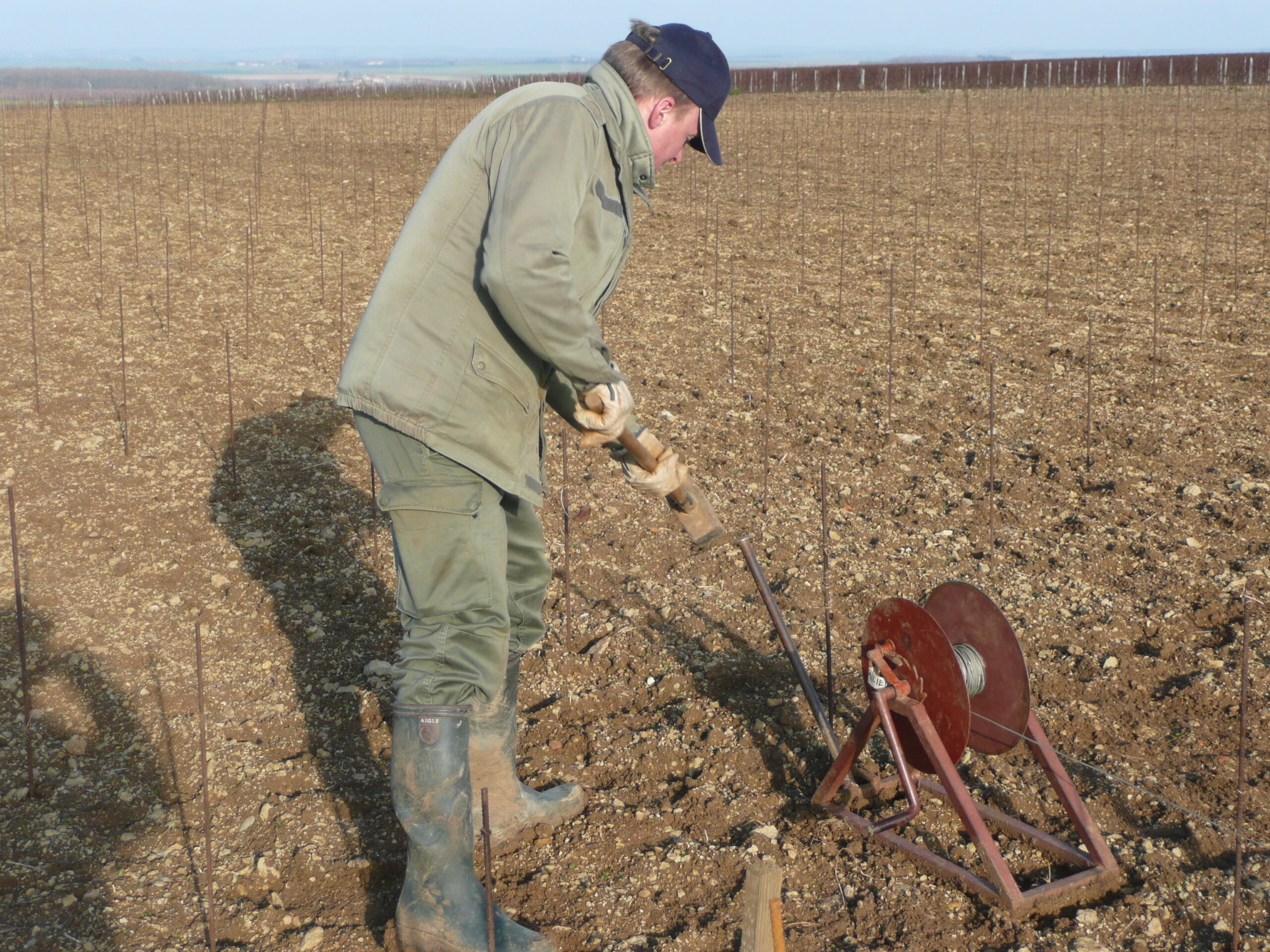
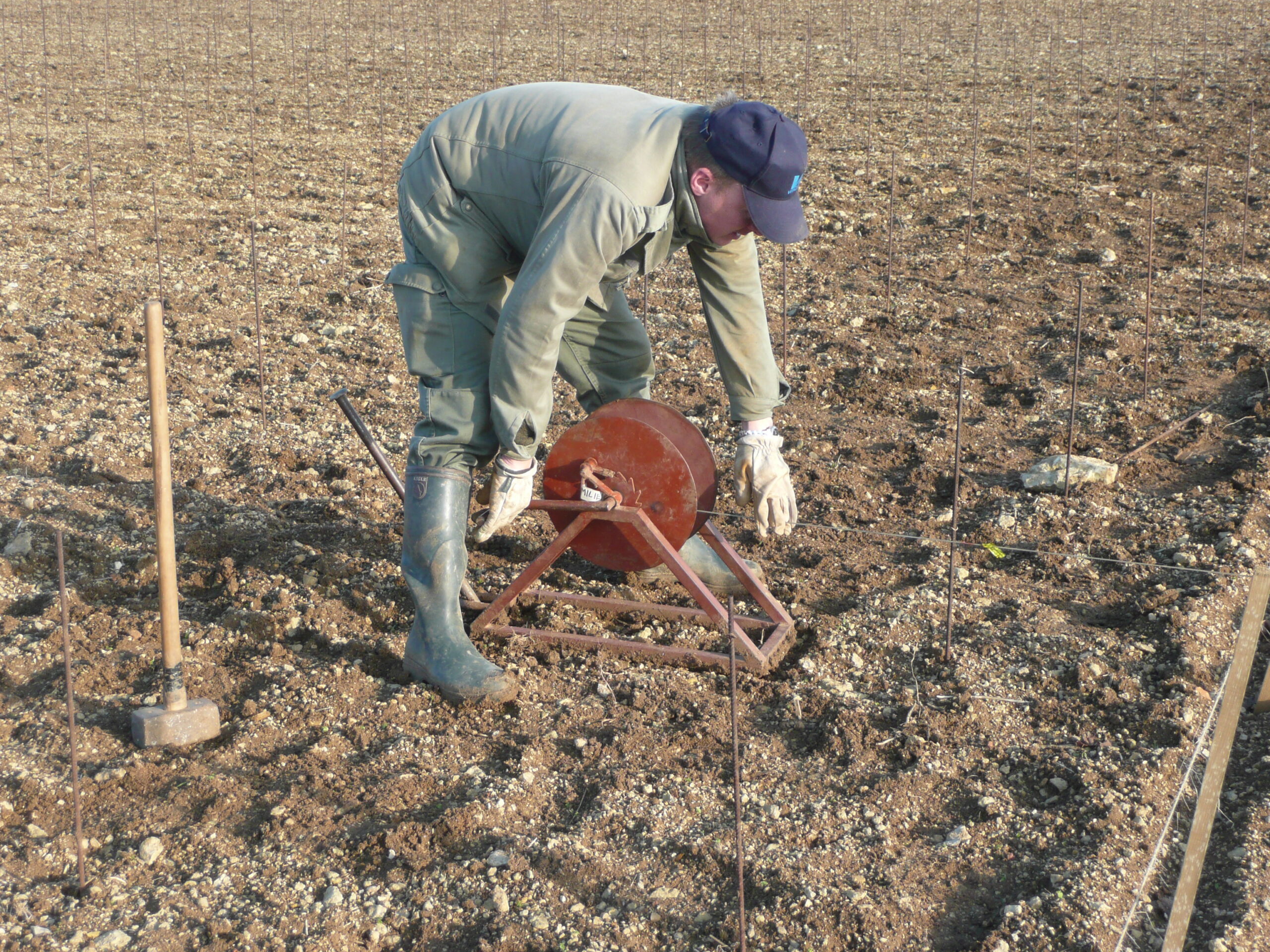
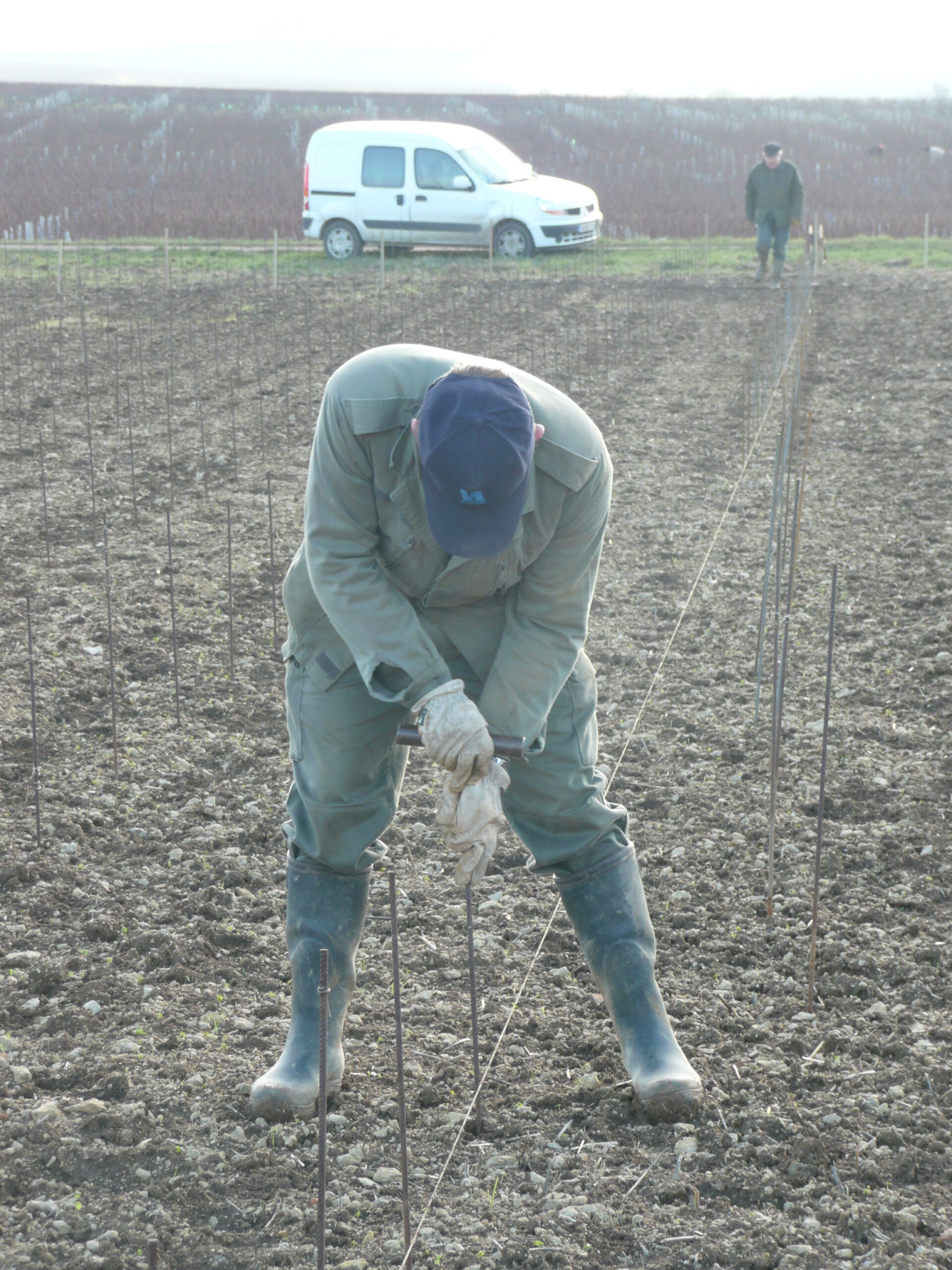
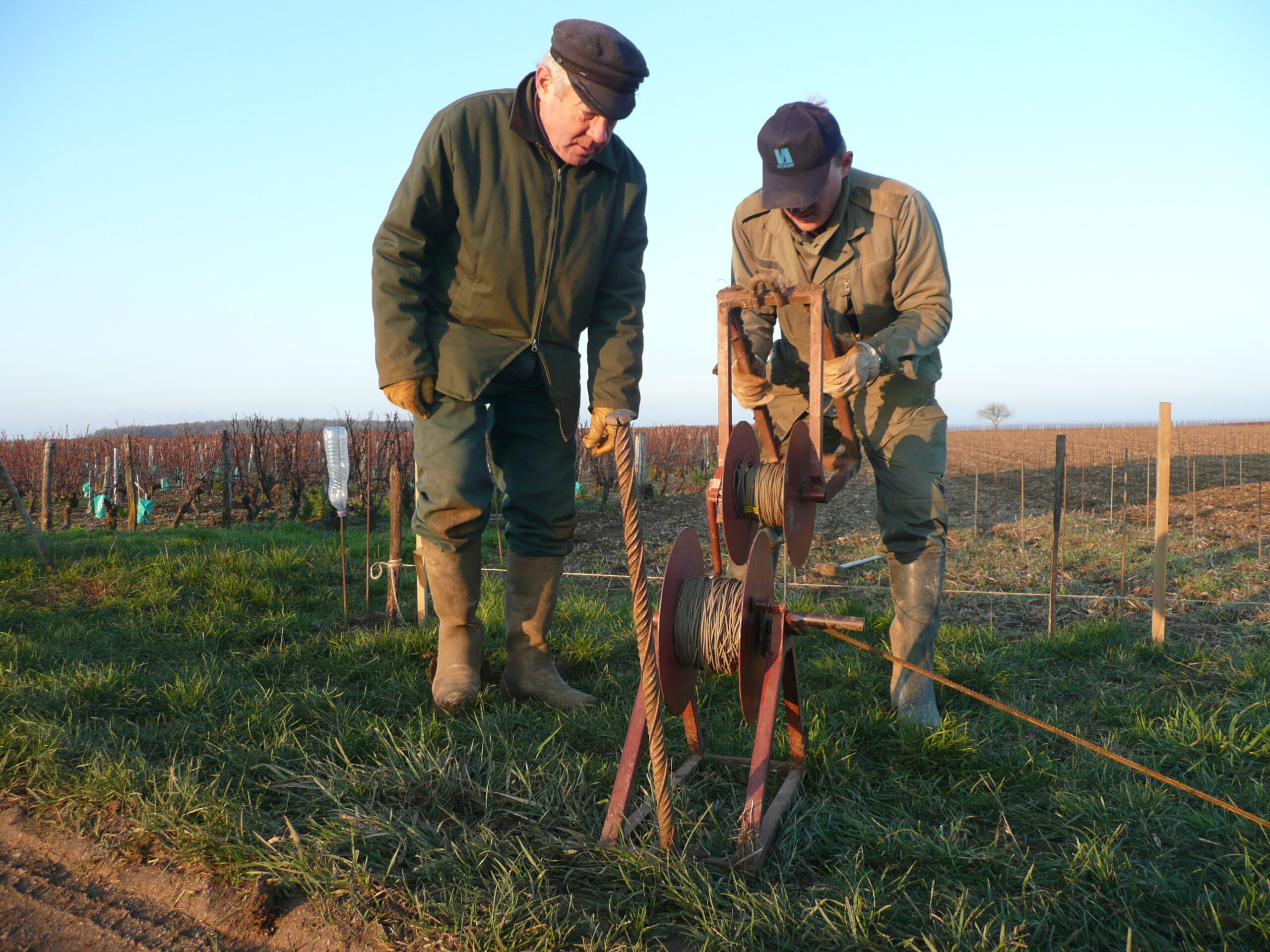
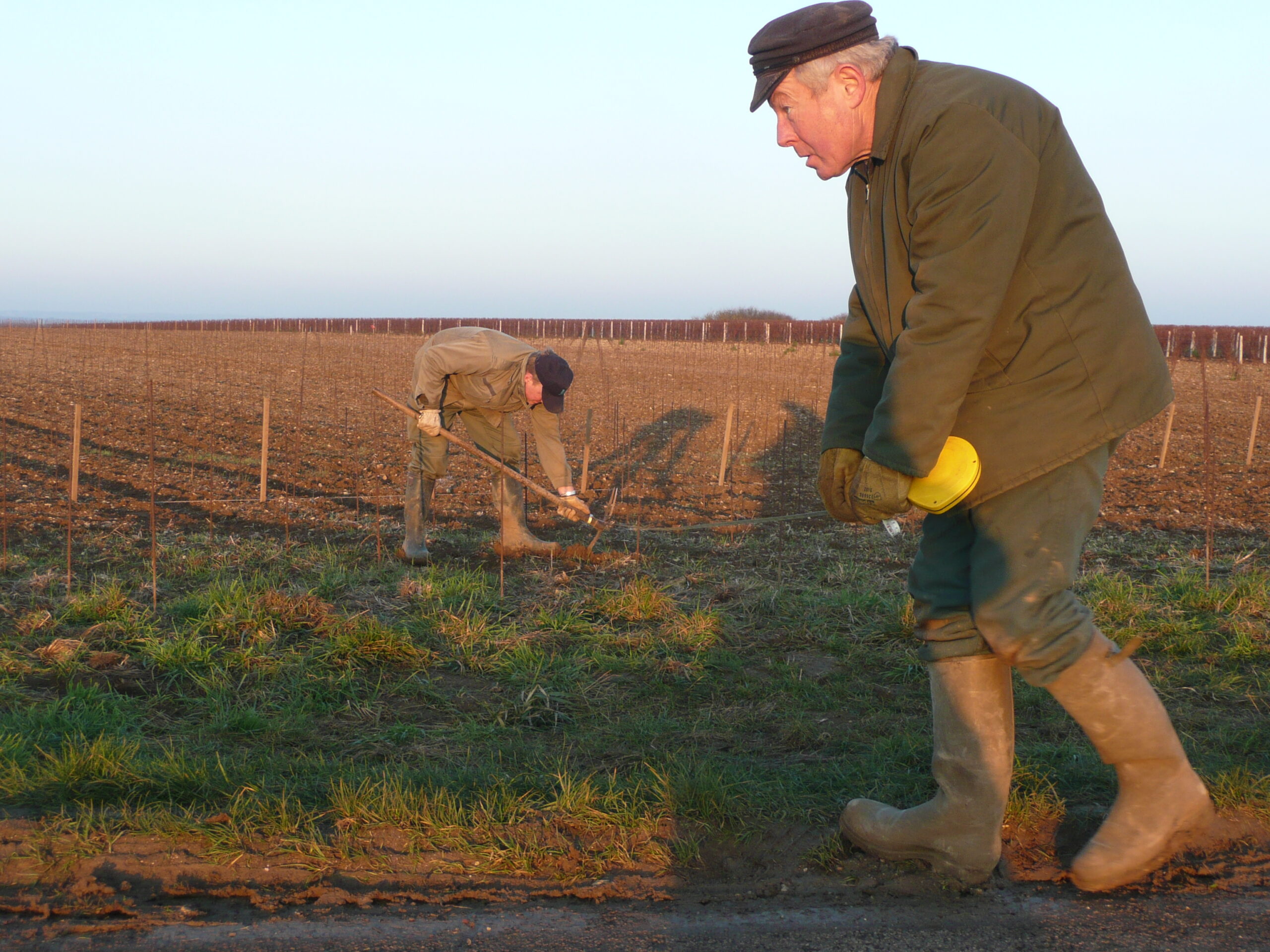
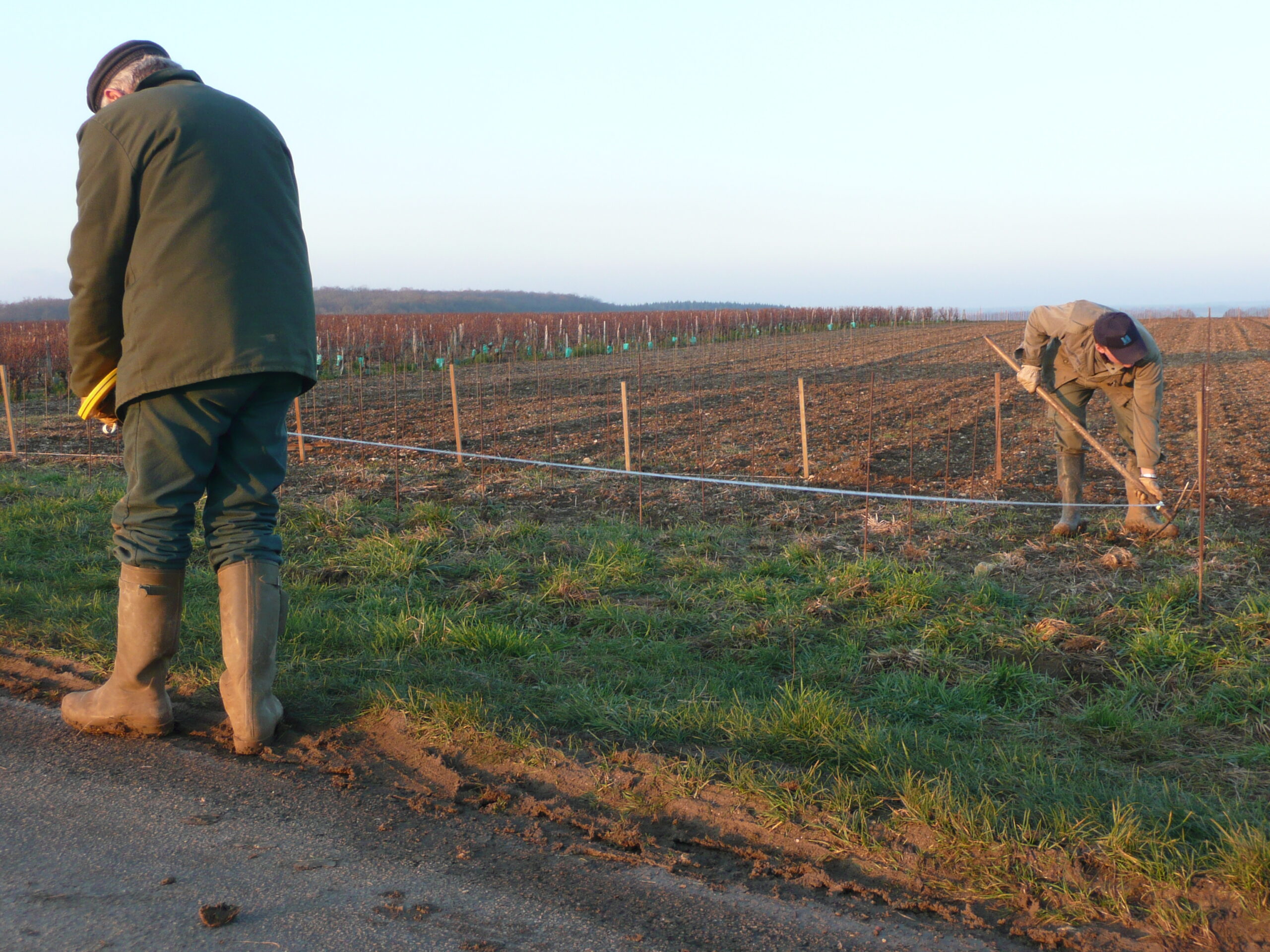
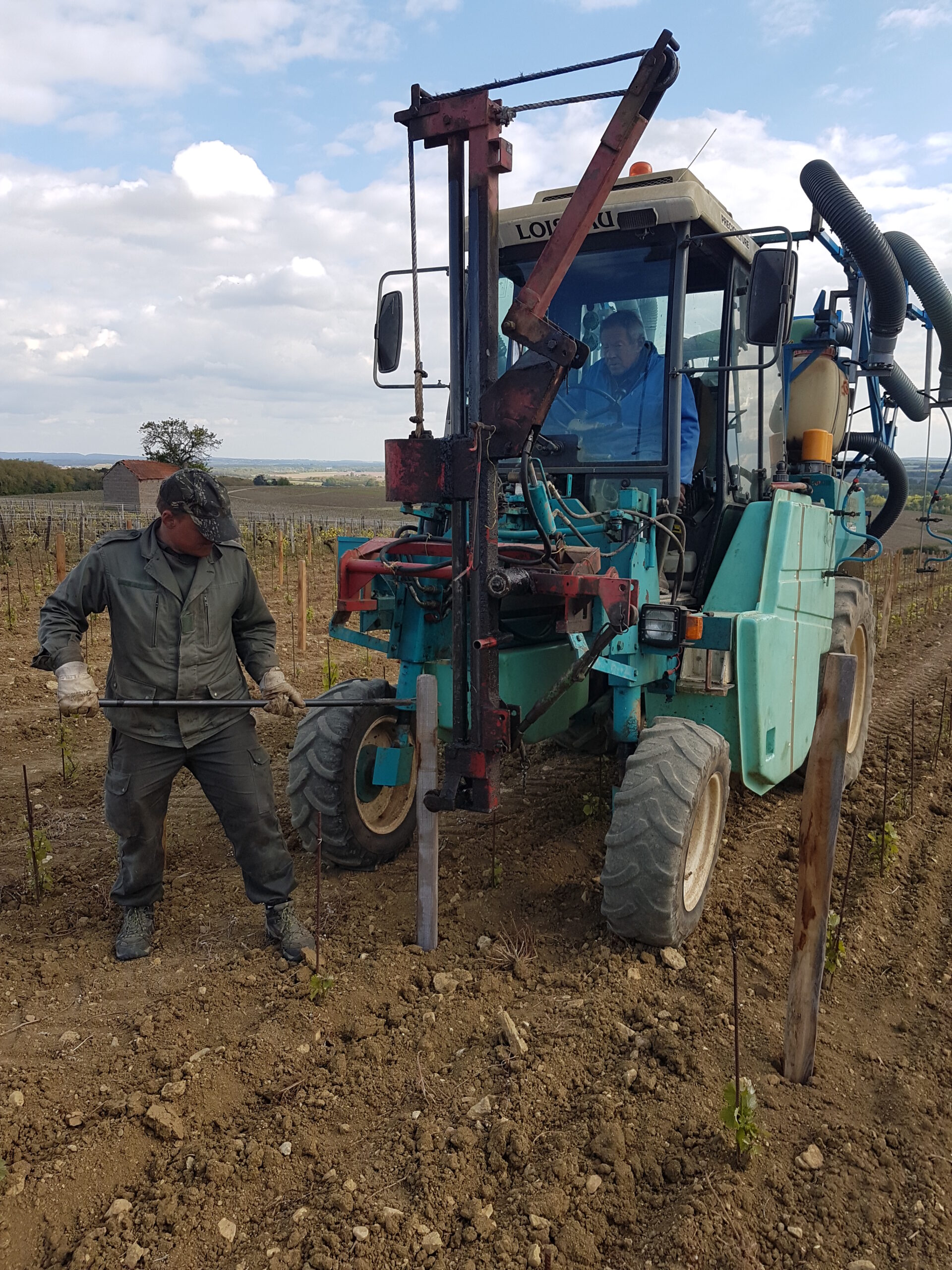
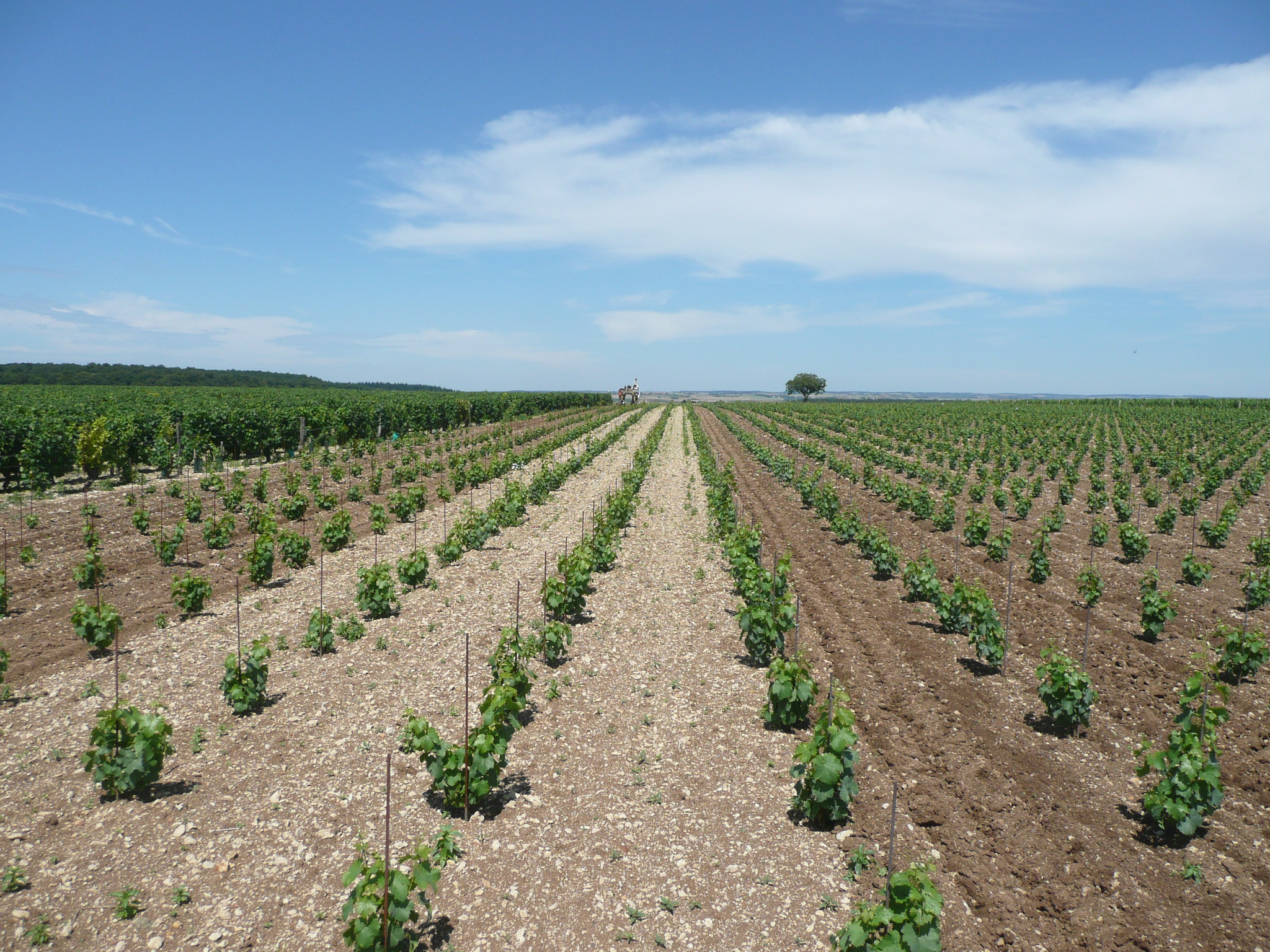
To produce good wine, you need beautiful vines. Preparing the land is therefore an essential step. It all starts with marking out the rows on the plot, which will serve as a guide for planting. Next, the first stakes are planted, thin metal rods that mark the future location of the vines. Once all the stakes are aligned across the entire surface, the squareness is checked to ensure that the rows are straight and uniform. This precision work is essential for the next steps. Finally, the grafts are planted, which will become beautiful vines in a few years. Four years later, these vines will produce the grapes used to make our Pouilly-Fumé. Next, sturdier stakes are installed to support the future trellis structure.
The Pruning
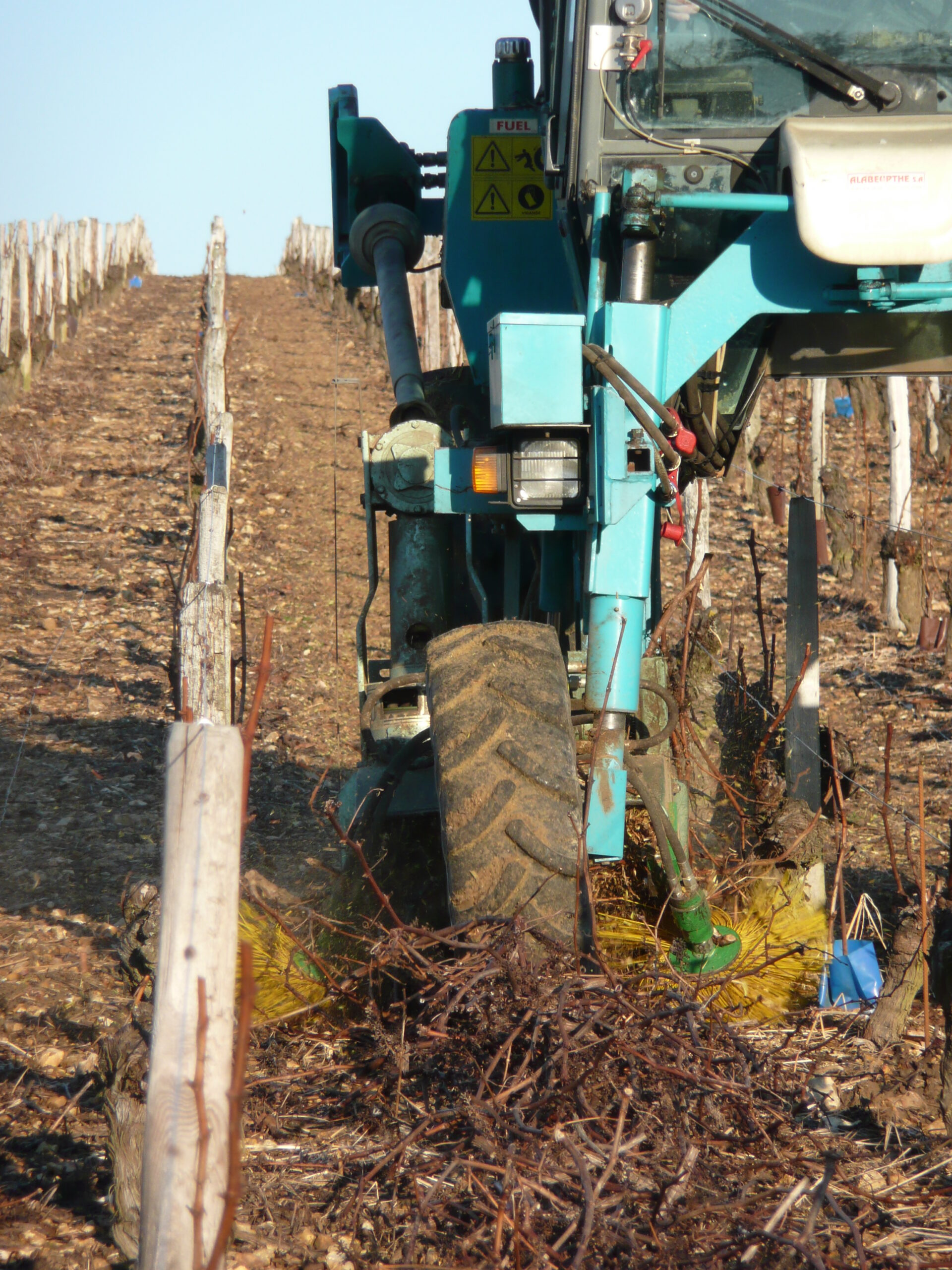
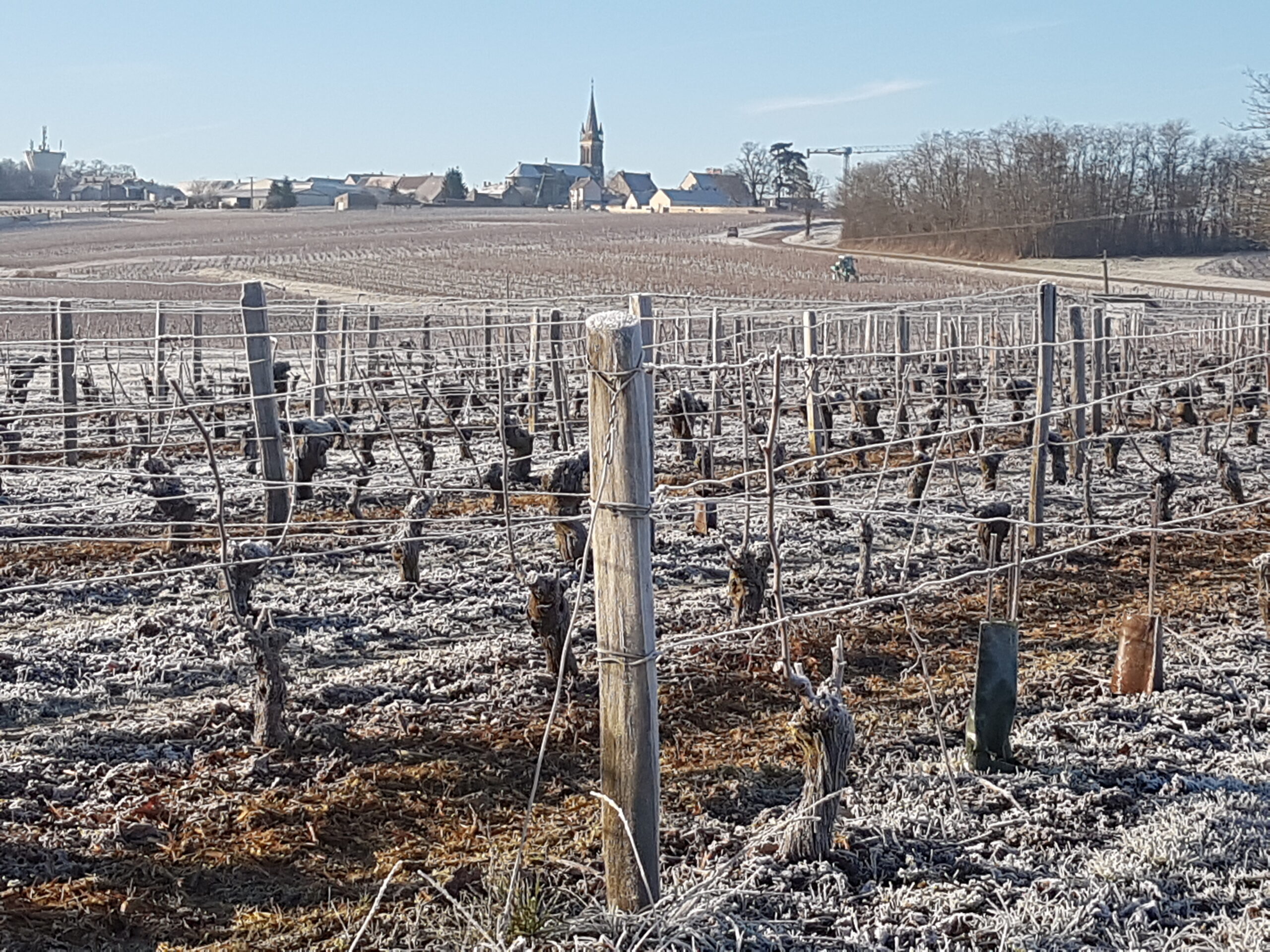
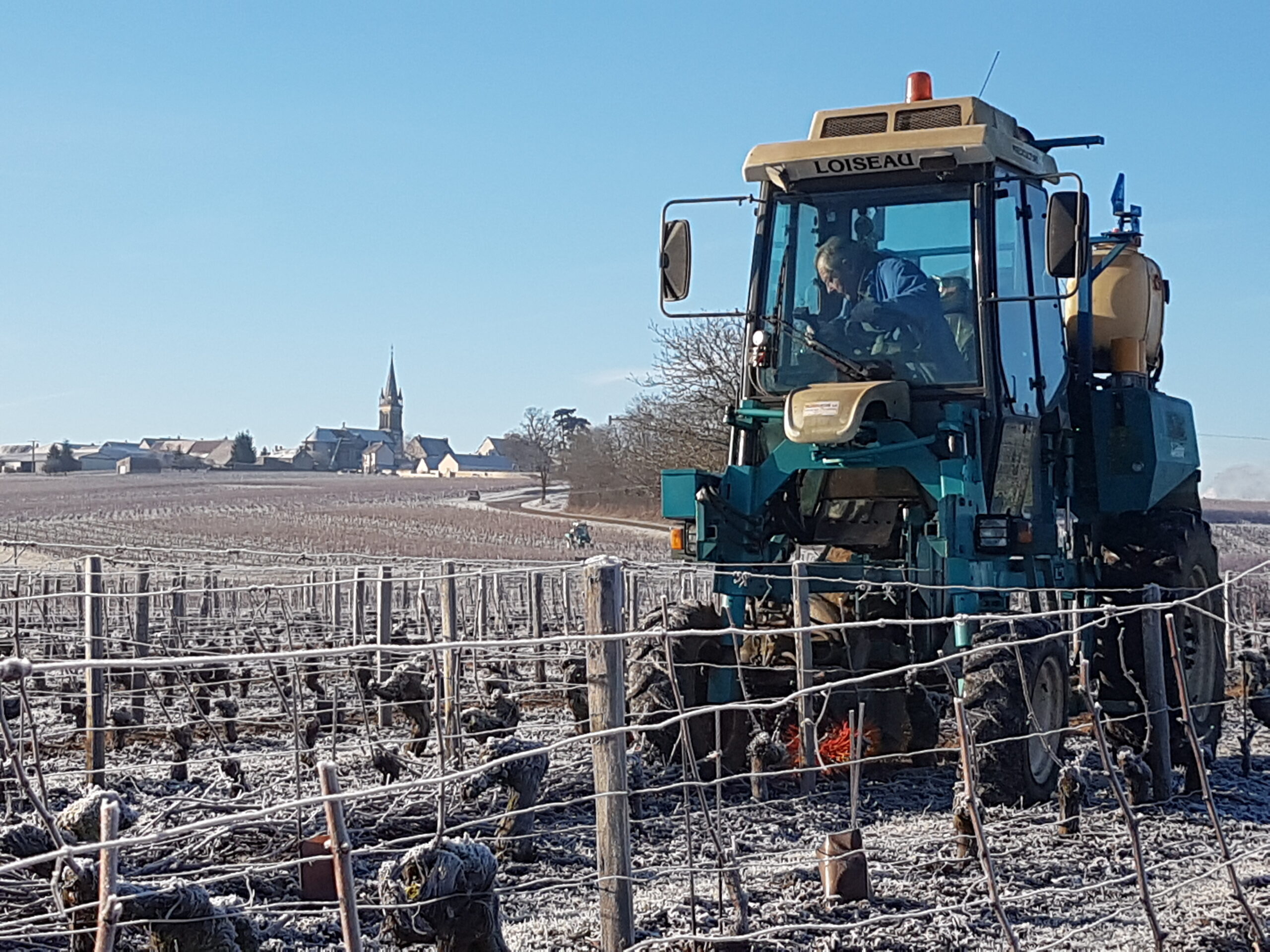
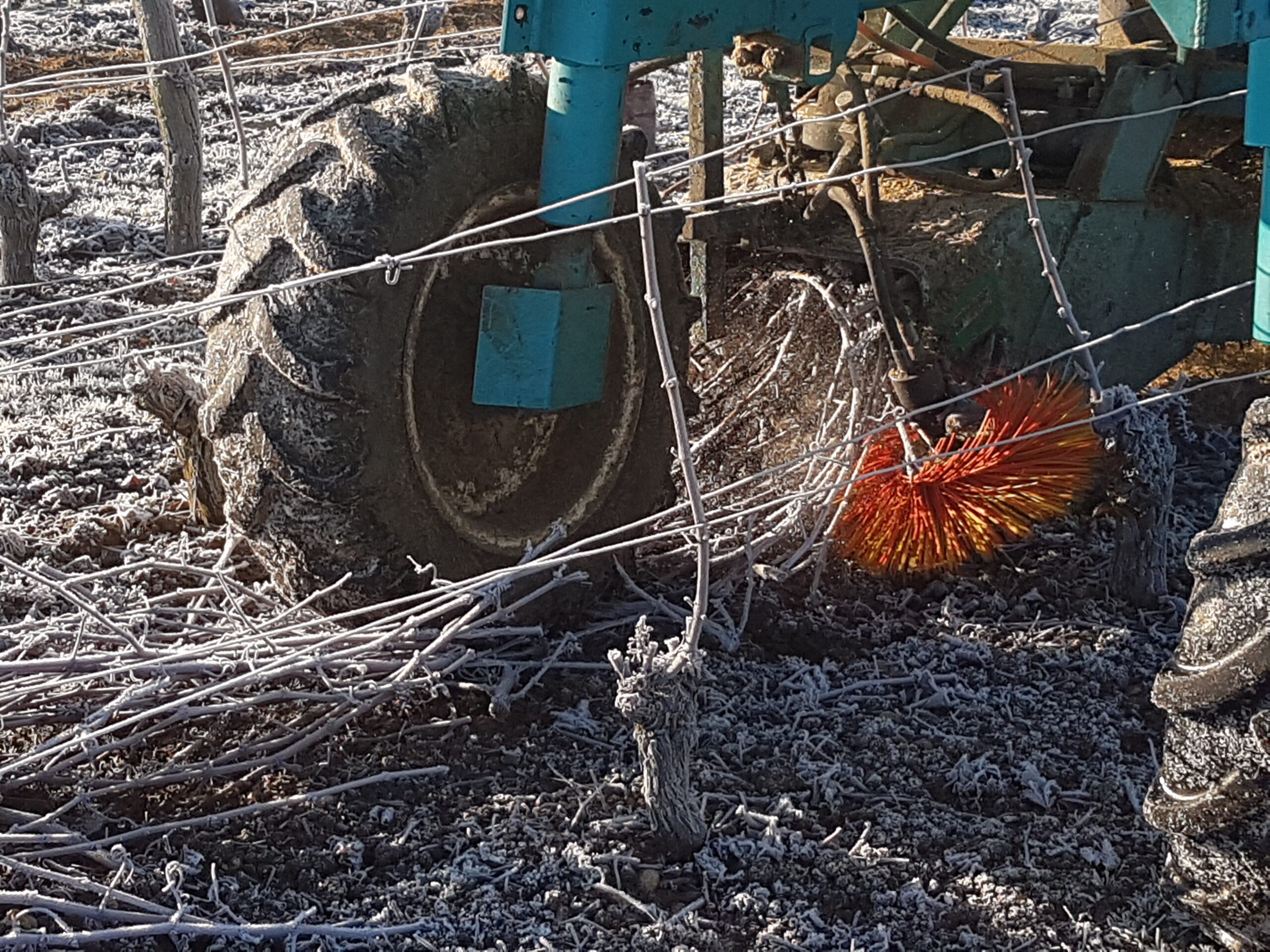
The start of a new season begins when the leaves have fallen. Then comes the crucial stage of pruning, usually carried out between December and March, or even April depending on weather conditions. At the estate, we use the single Guyot pruning method, leaving a spur and a cane on each vine. Once pruning is complete, we remove the cut shoots. We then have to wait for a frost or cold spell to harden the ground before we can shred the vine shoots. The frost firms up the soil, allowing the tractor to pass without the vine shoots sinking into the ground. This operation cannot therefore be carried out in the rain.
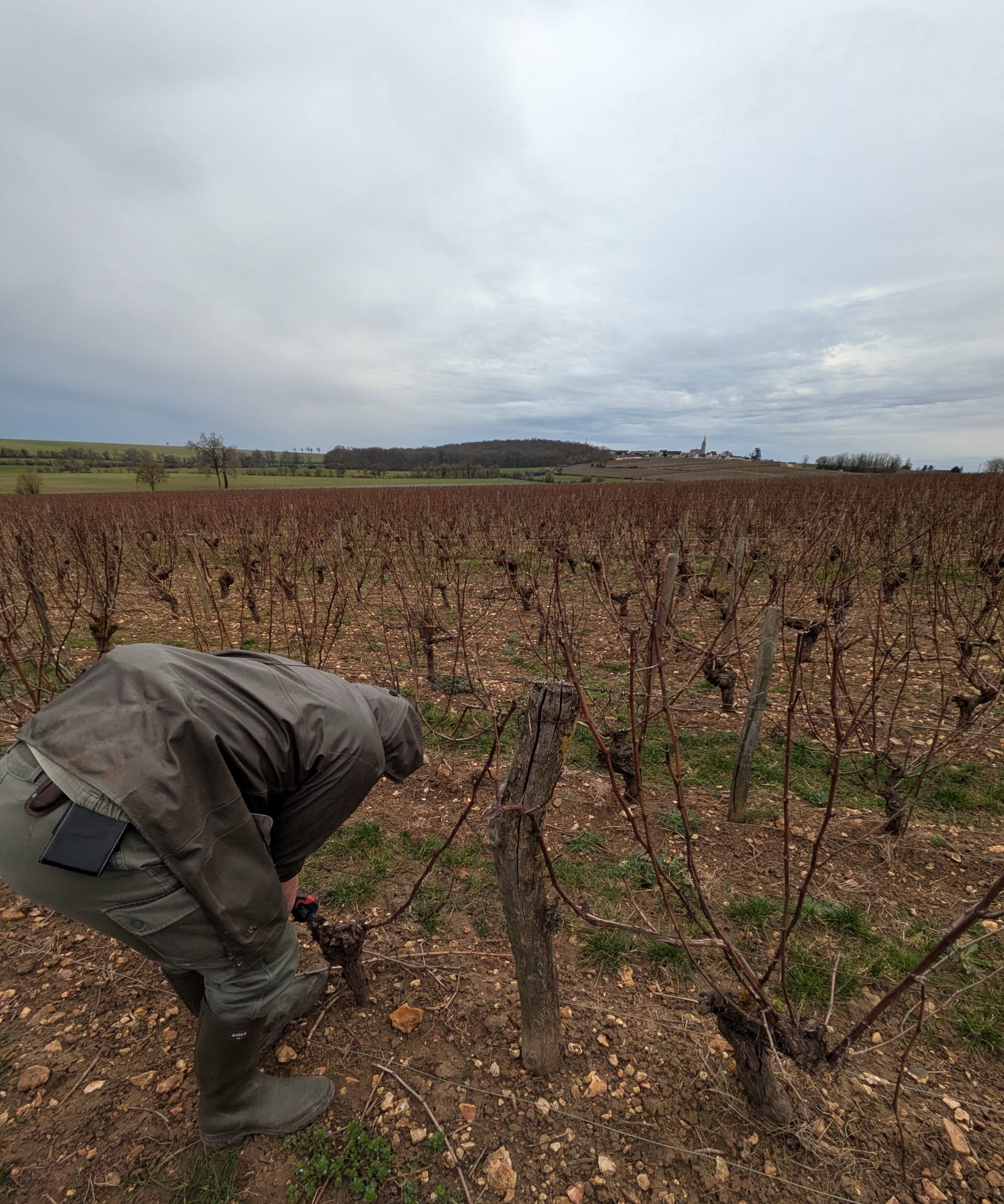
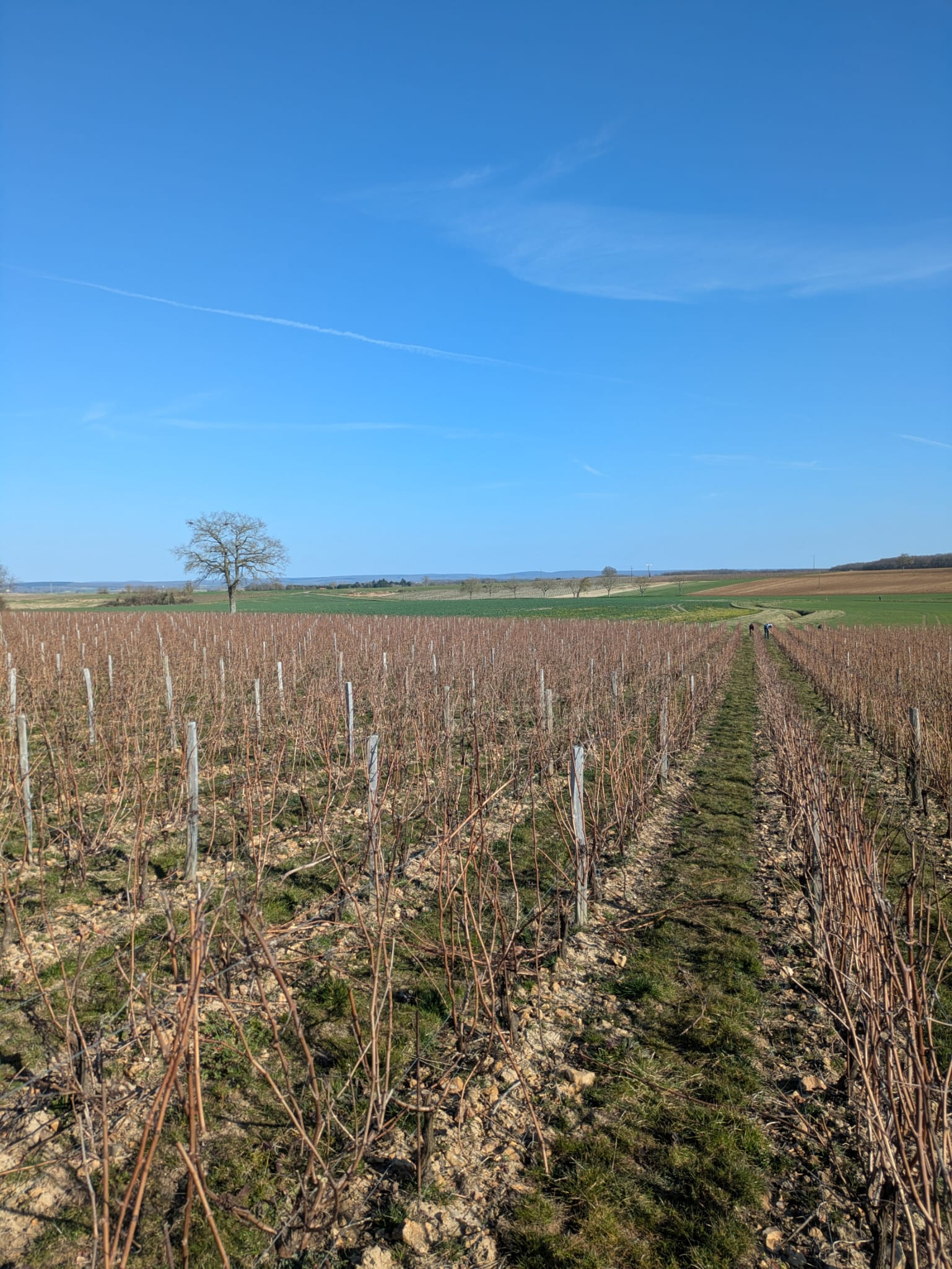

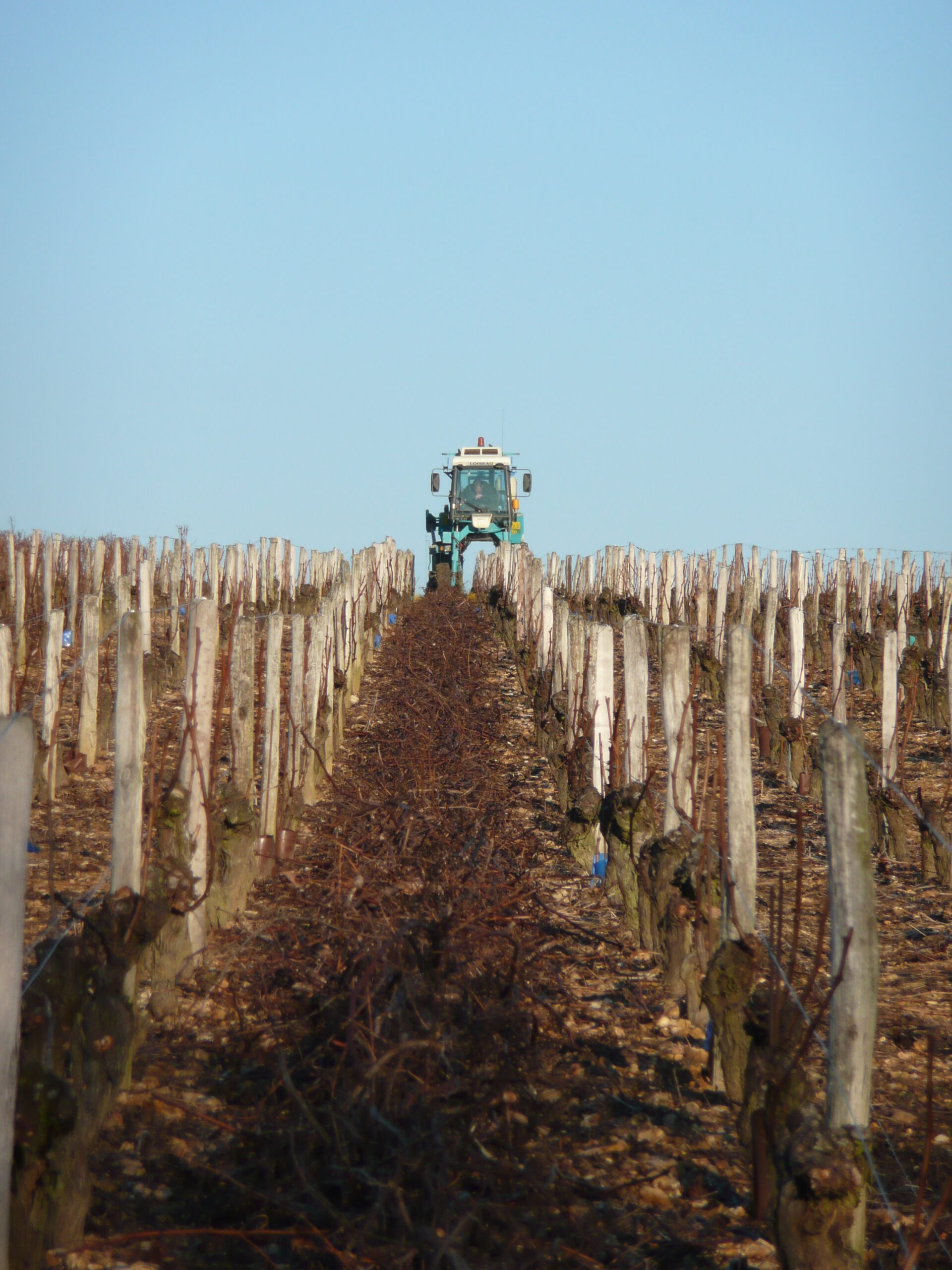
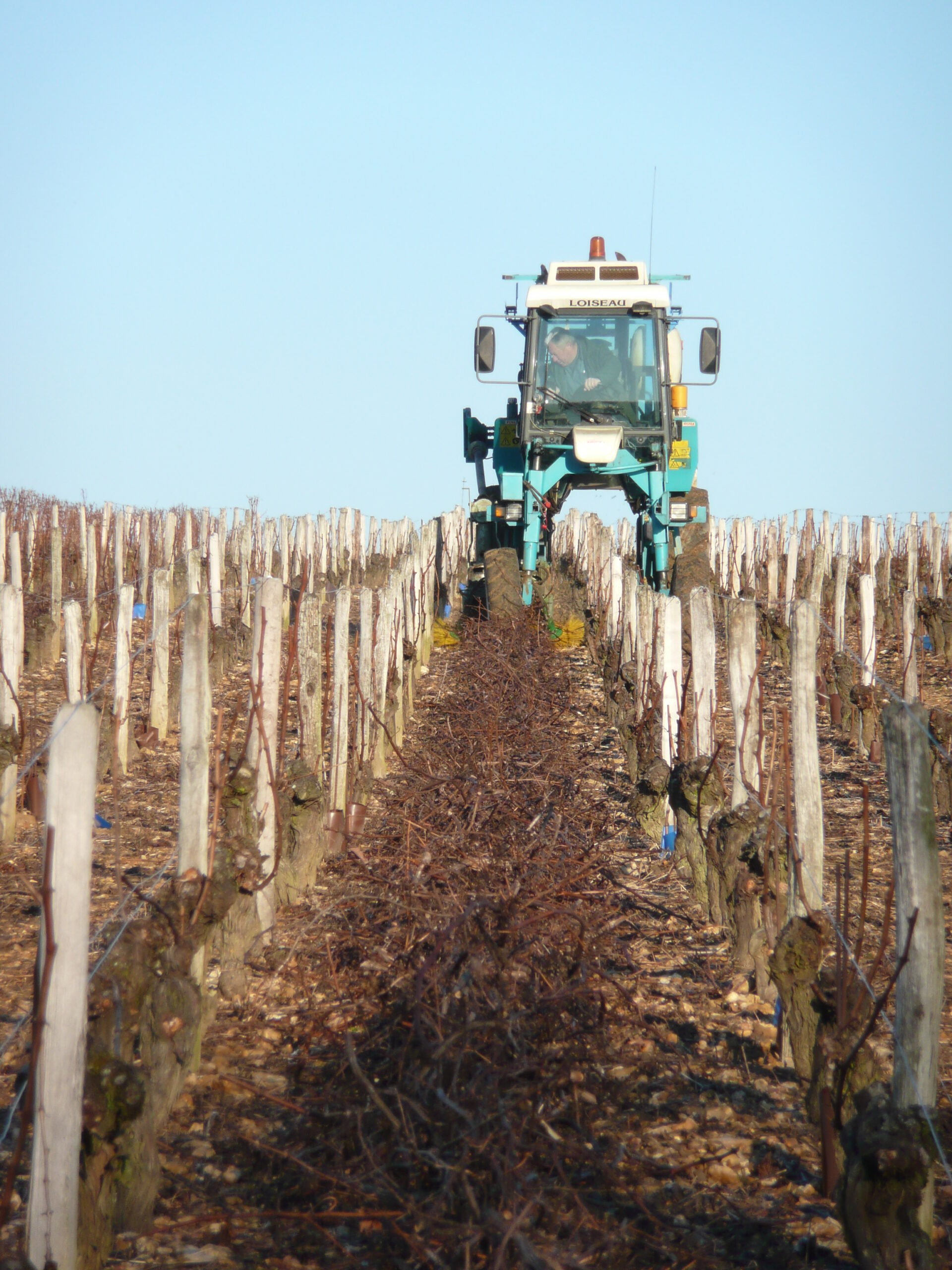
After pruning, it’s time to shred the vine shoots
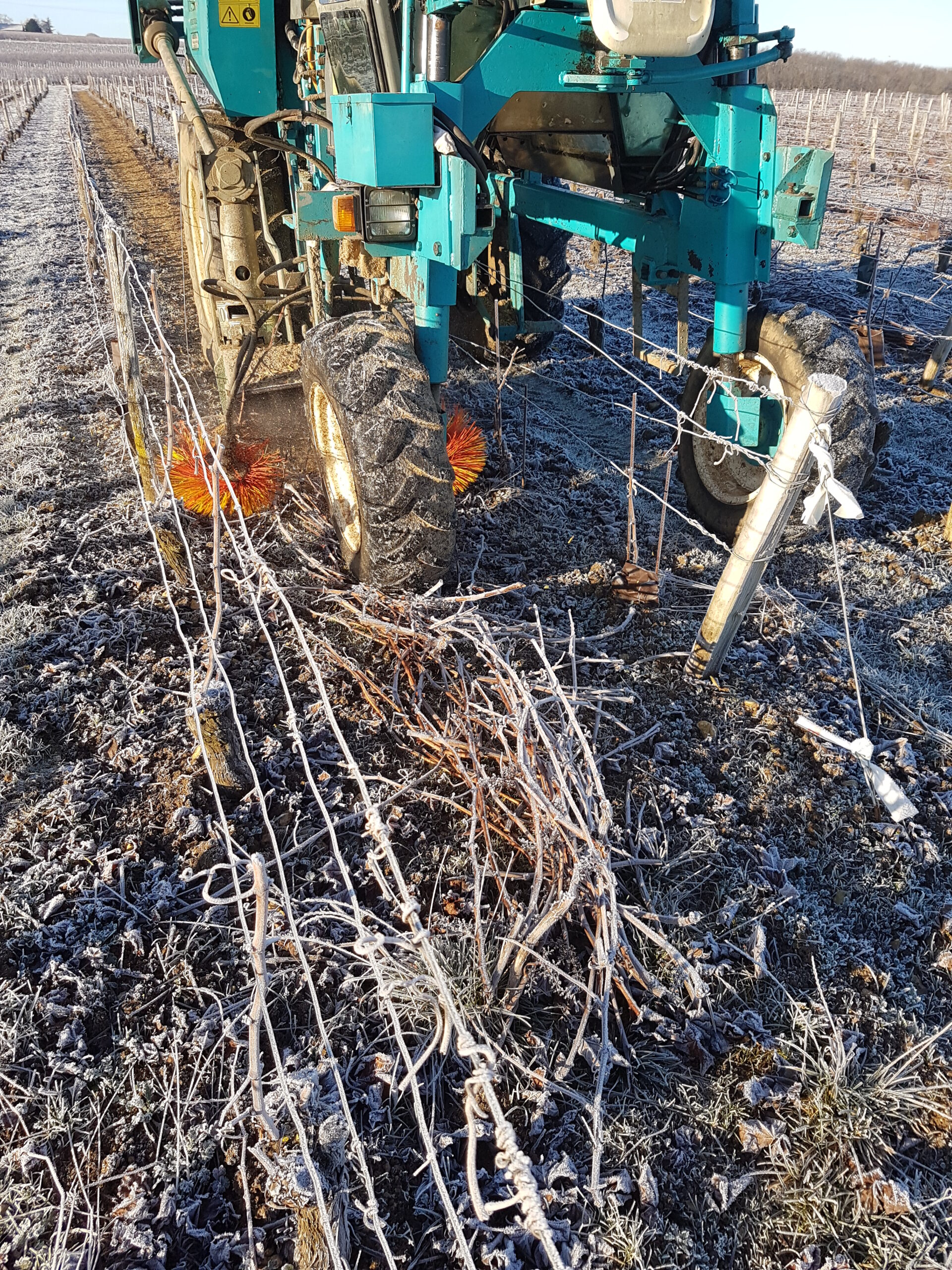
After winter pruning, the cut vine shoots must be removed. This operation, which consists of removing the pruned shoots and placing them between the rows, is usually carried out between January and April, depending on weather conditions. Once the wood has been removed, it is mechanically shredded. Shredding allows the vine shoots to be returned to the soil, where they are transformed into organic matter that serves as a natural fertiliser. This plant recycling is valuable, as it covers about one-third of the vineyard’s annual organic matter requirements, which is particularly valuable in the context of sustainable viticulture.
When spring frost threatens
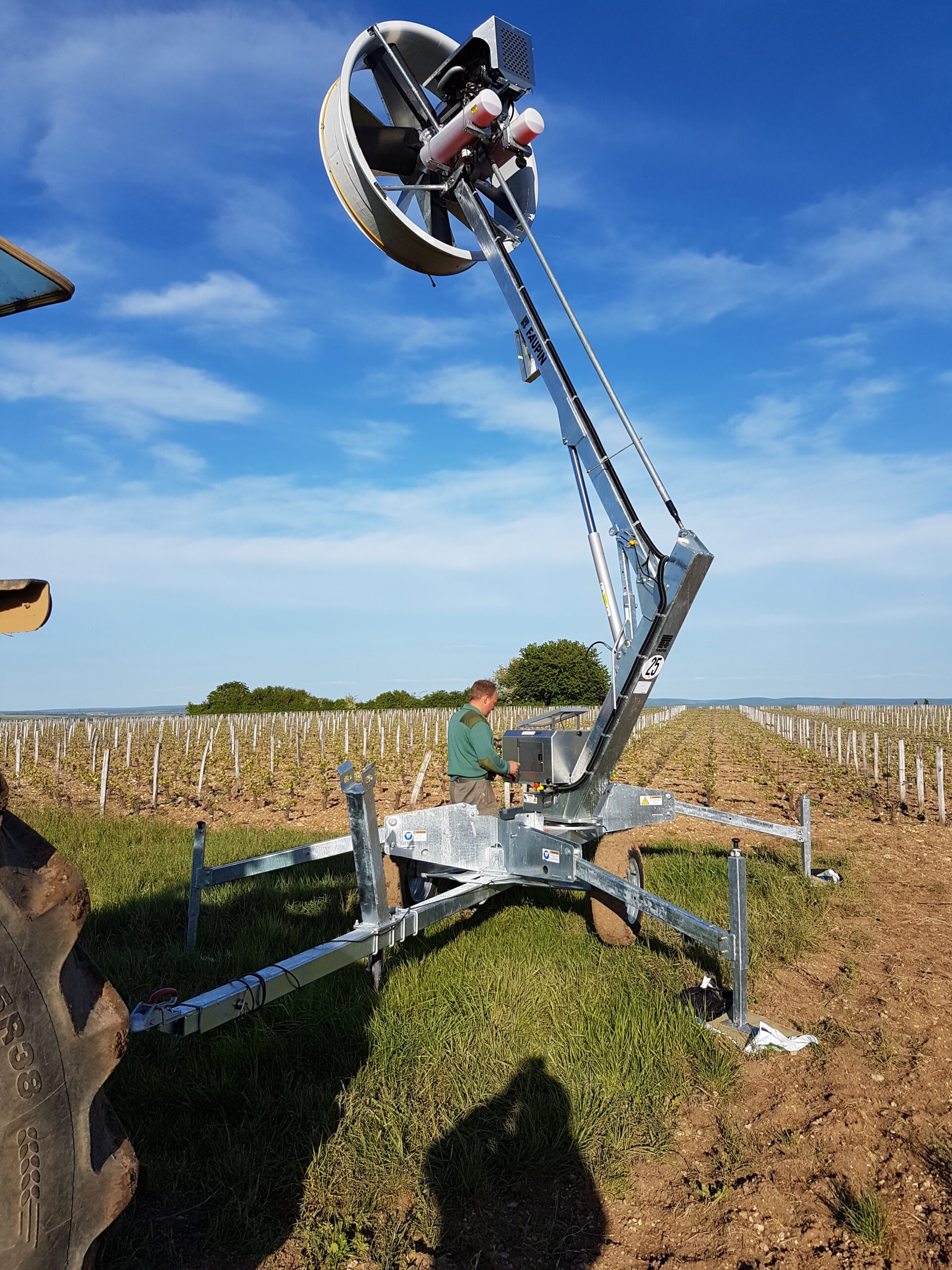
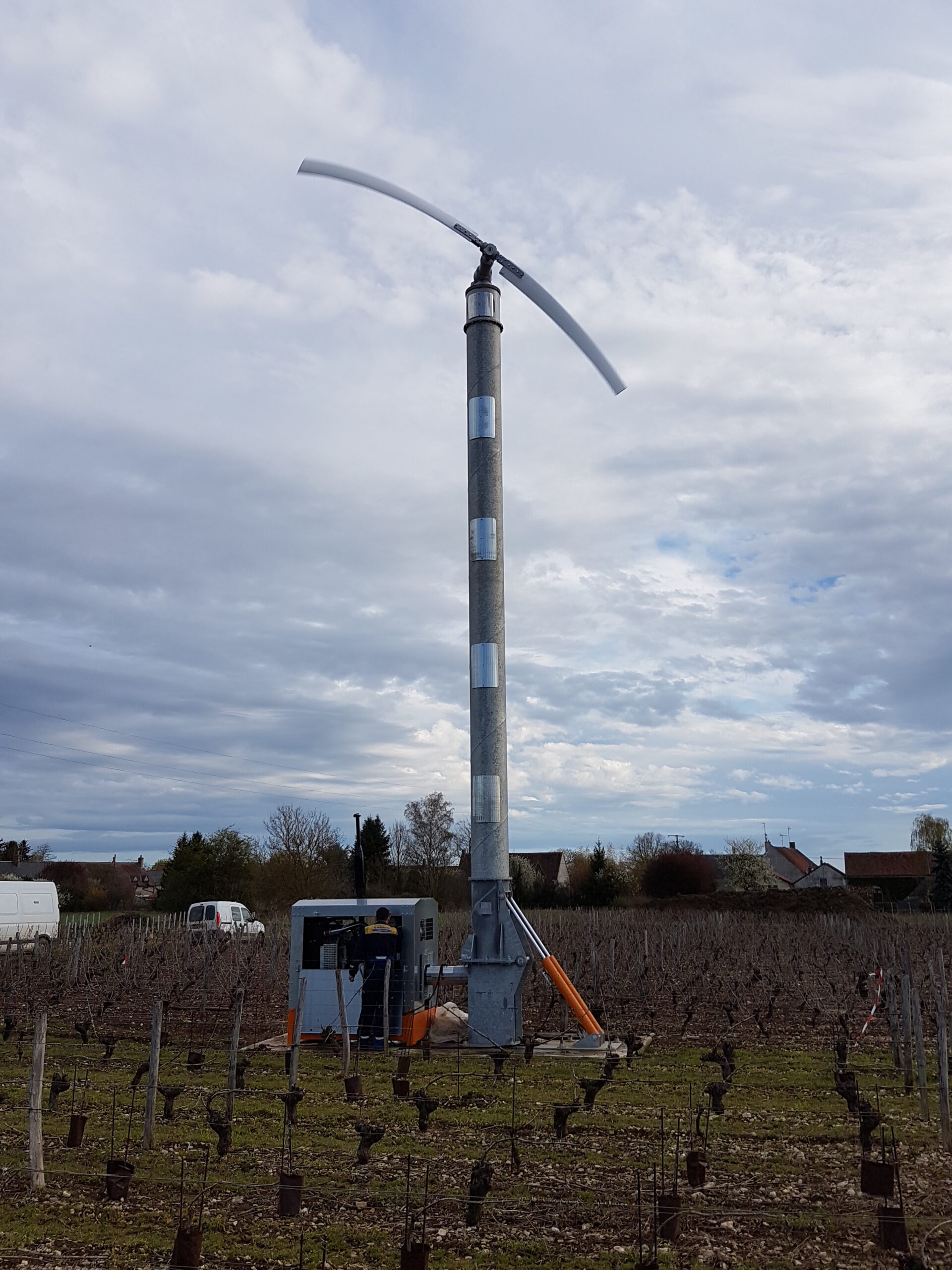
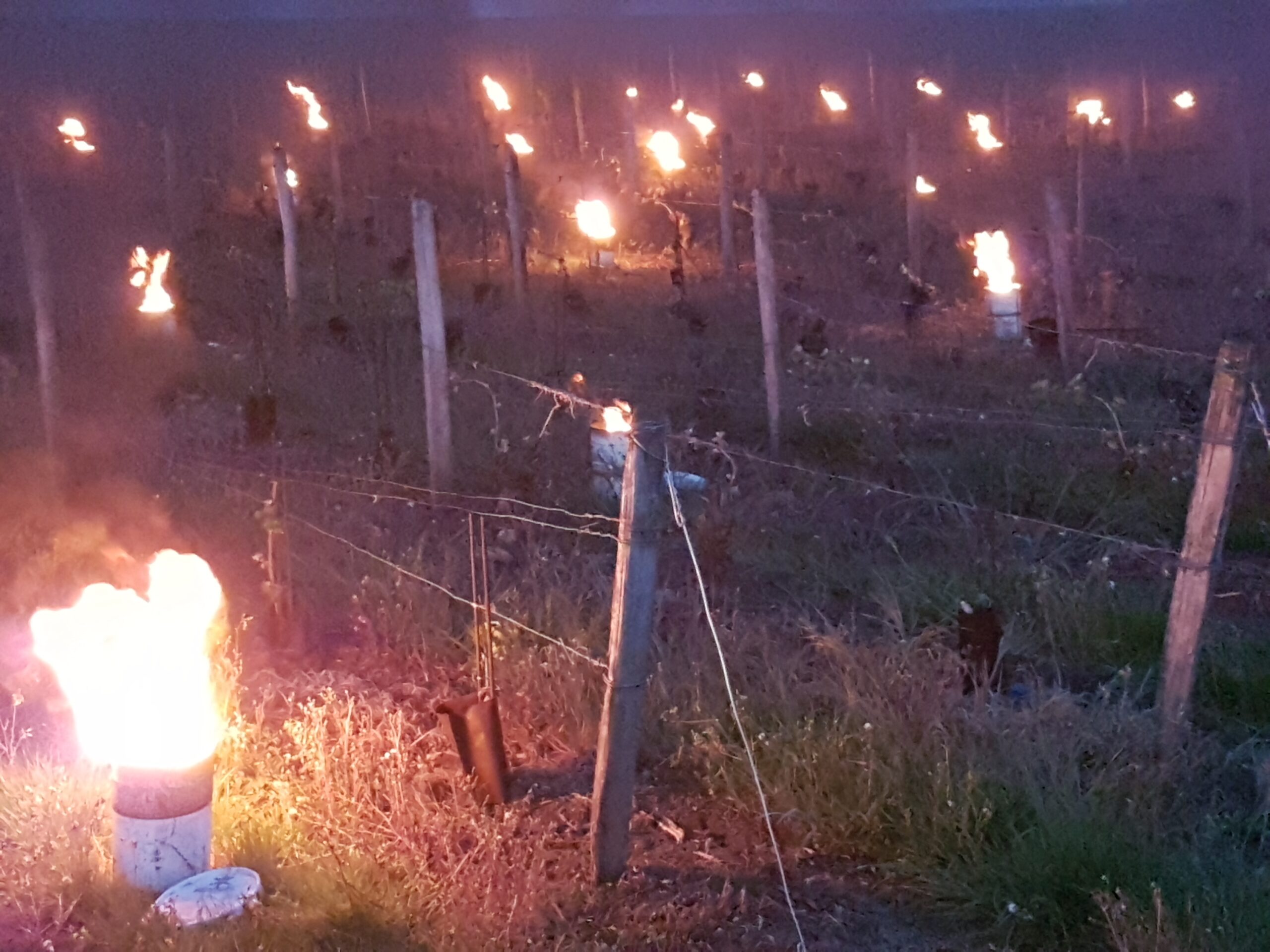
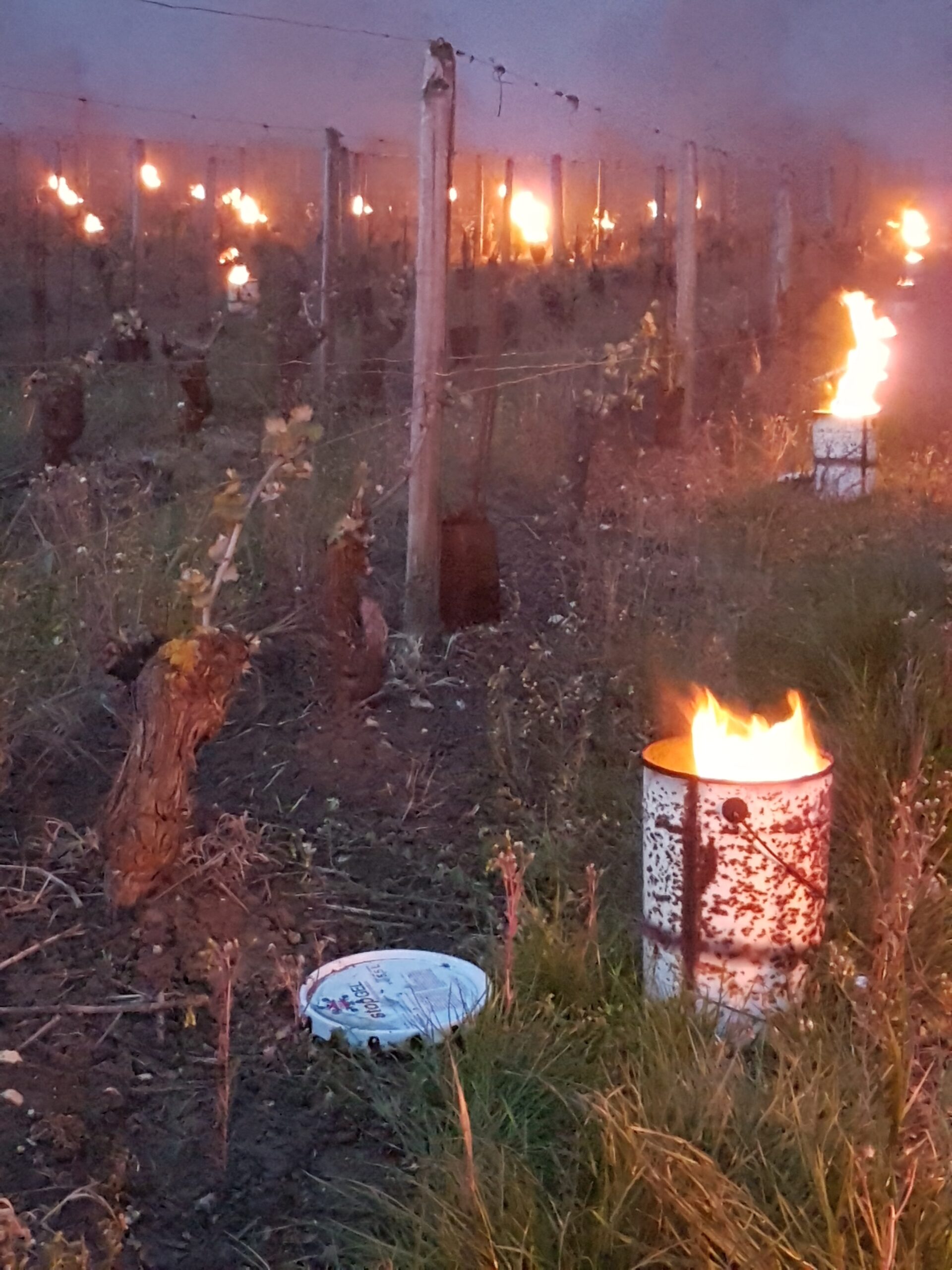
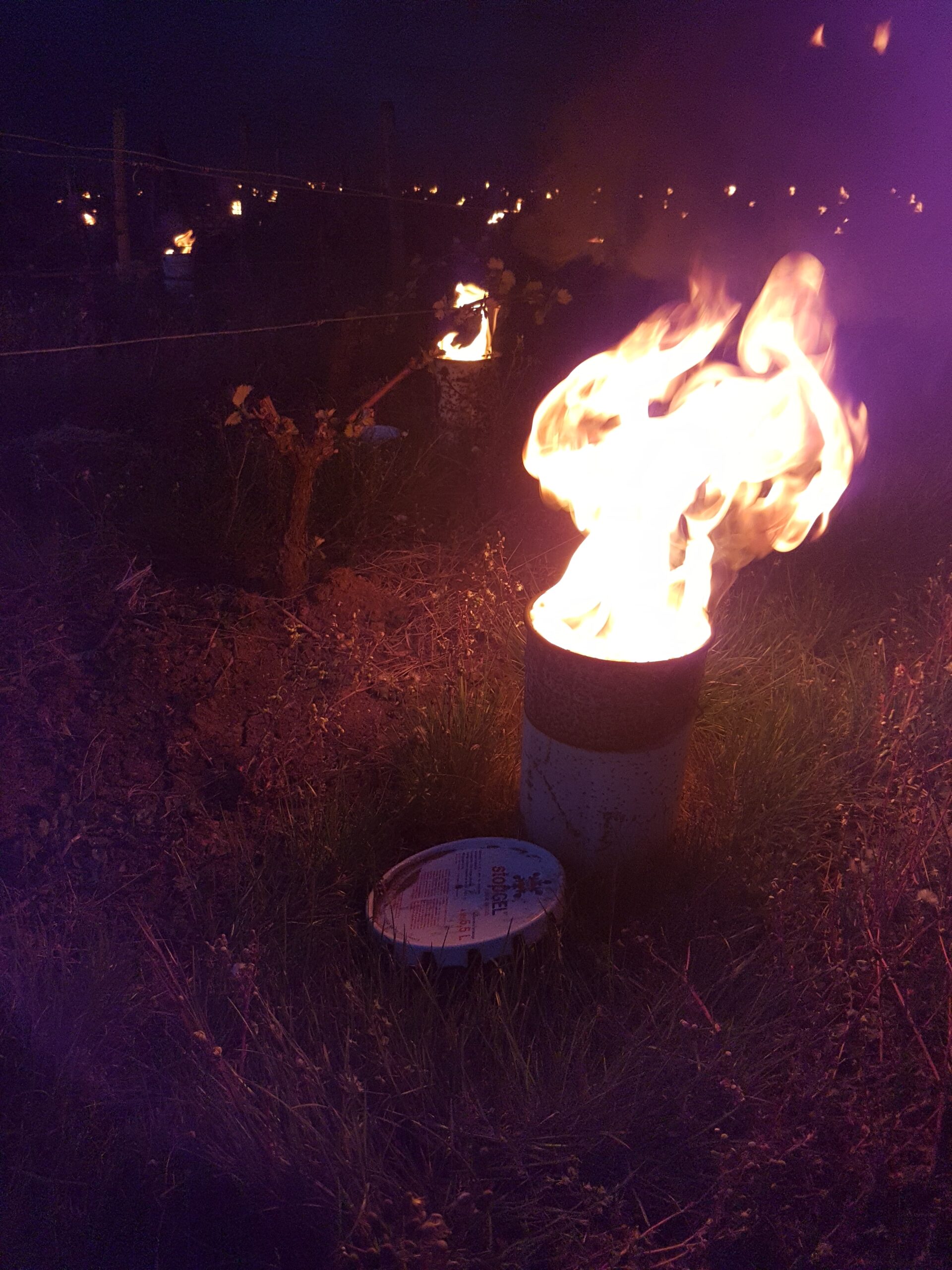
Along with hail, spring frost is one of the greatest risks to vines, especially when the buds have already emerged but are still fragile. Several measures are in place to protect the plots. At Riaux, we have invested in two mobile anti-frost towers and have a collective stake in a fixed tower installed in the vineyard, close to our plots. These towers operate on the principle of ventilation: they mix the cold air at ground level with the warmer air slightly higher up, creating a movement that limits the sudden drop in temperature around the vines. Mobile towers have the advantage of being able to be moved as needed from year to year, while fixed towers cover a specific area. In addition, paraffin candles can be lit between rows. Their radiant heat helps maintain the temperature just above the critical threshold. This is the most effective method. Although costly in terms of money, labour and energy, and not the most sustainable, these candles offer valuable (but limited) protection on the coldest nights.

Hoeing the soil
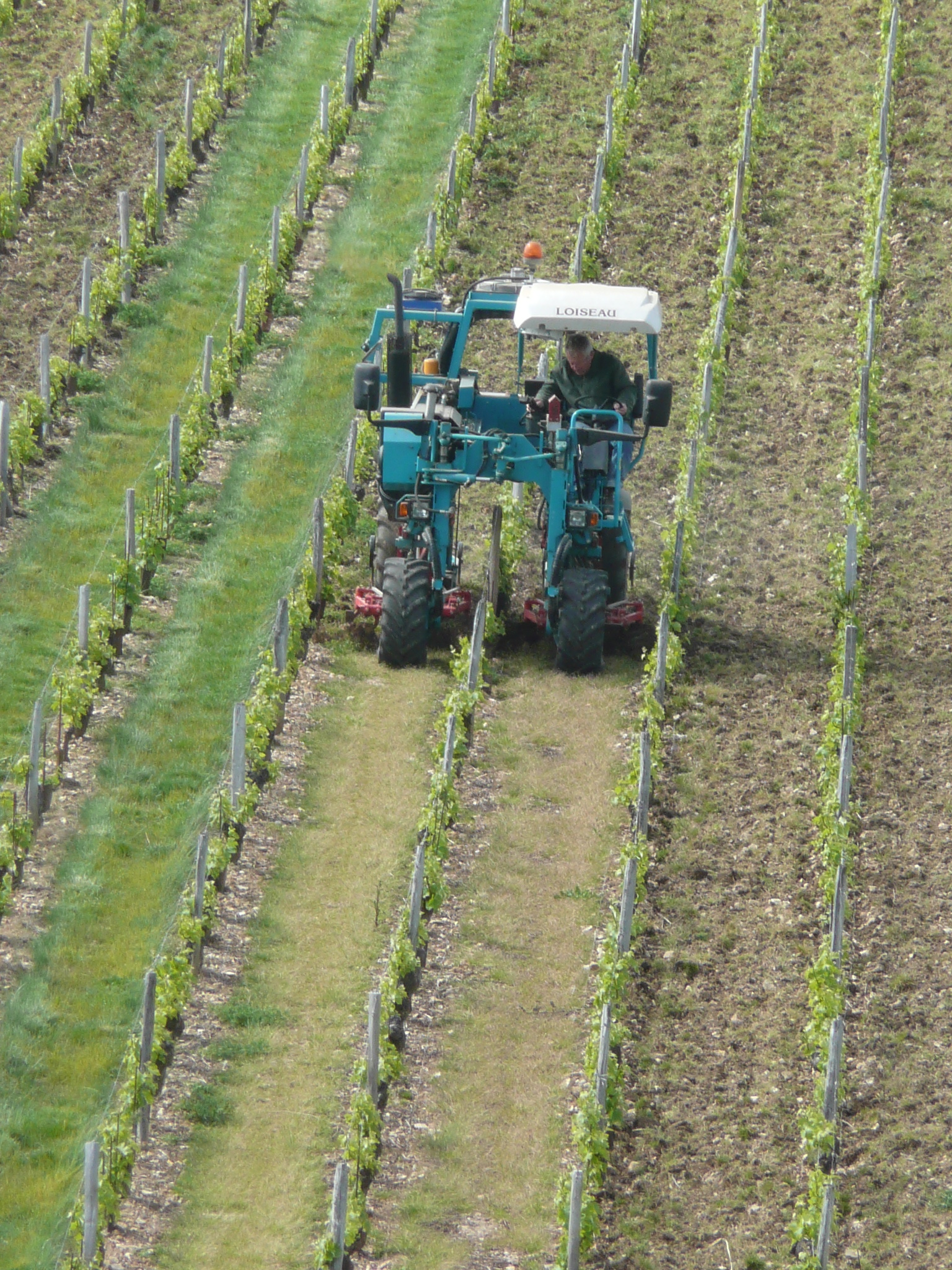
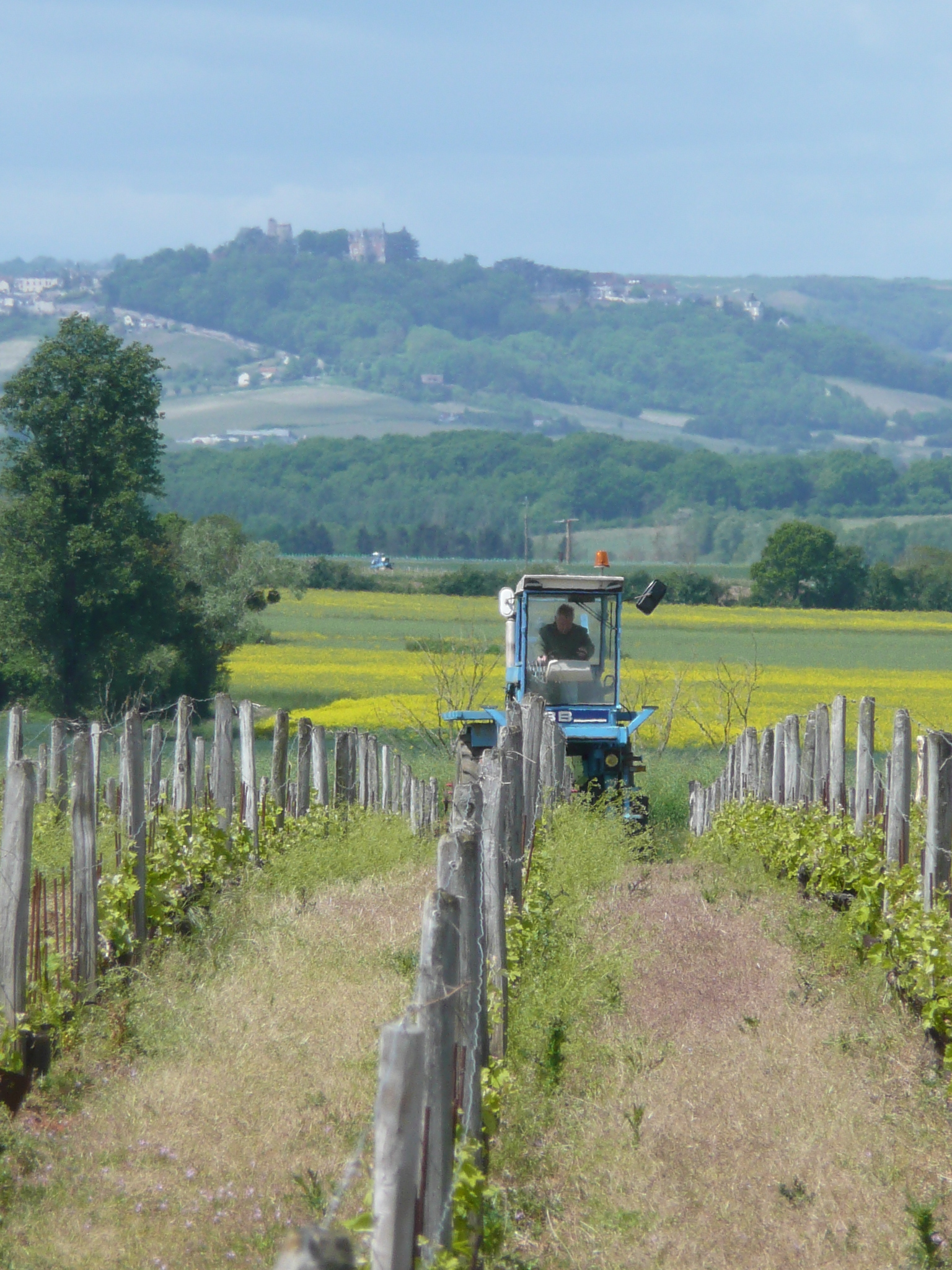
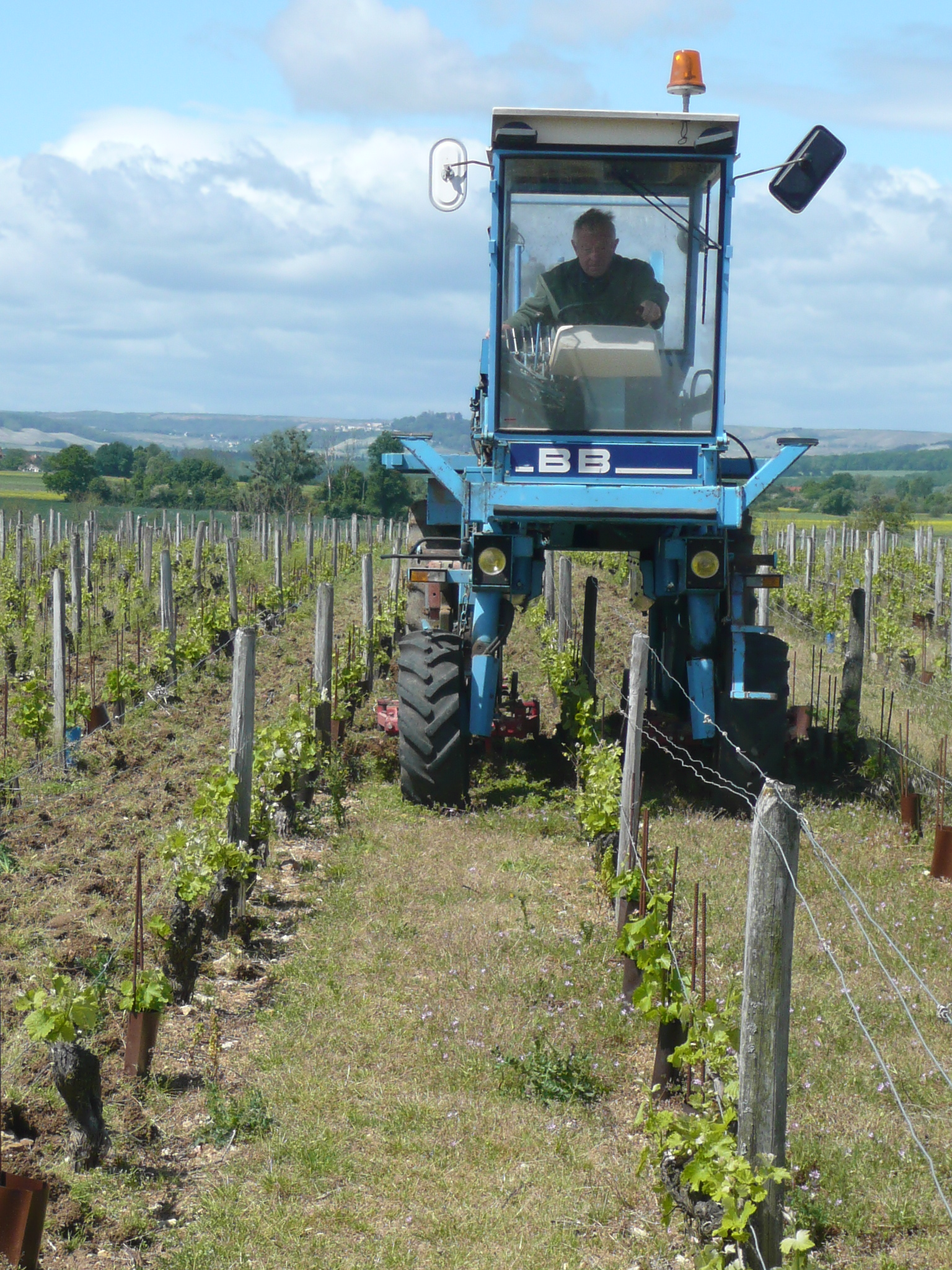
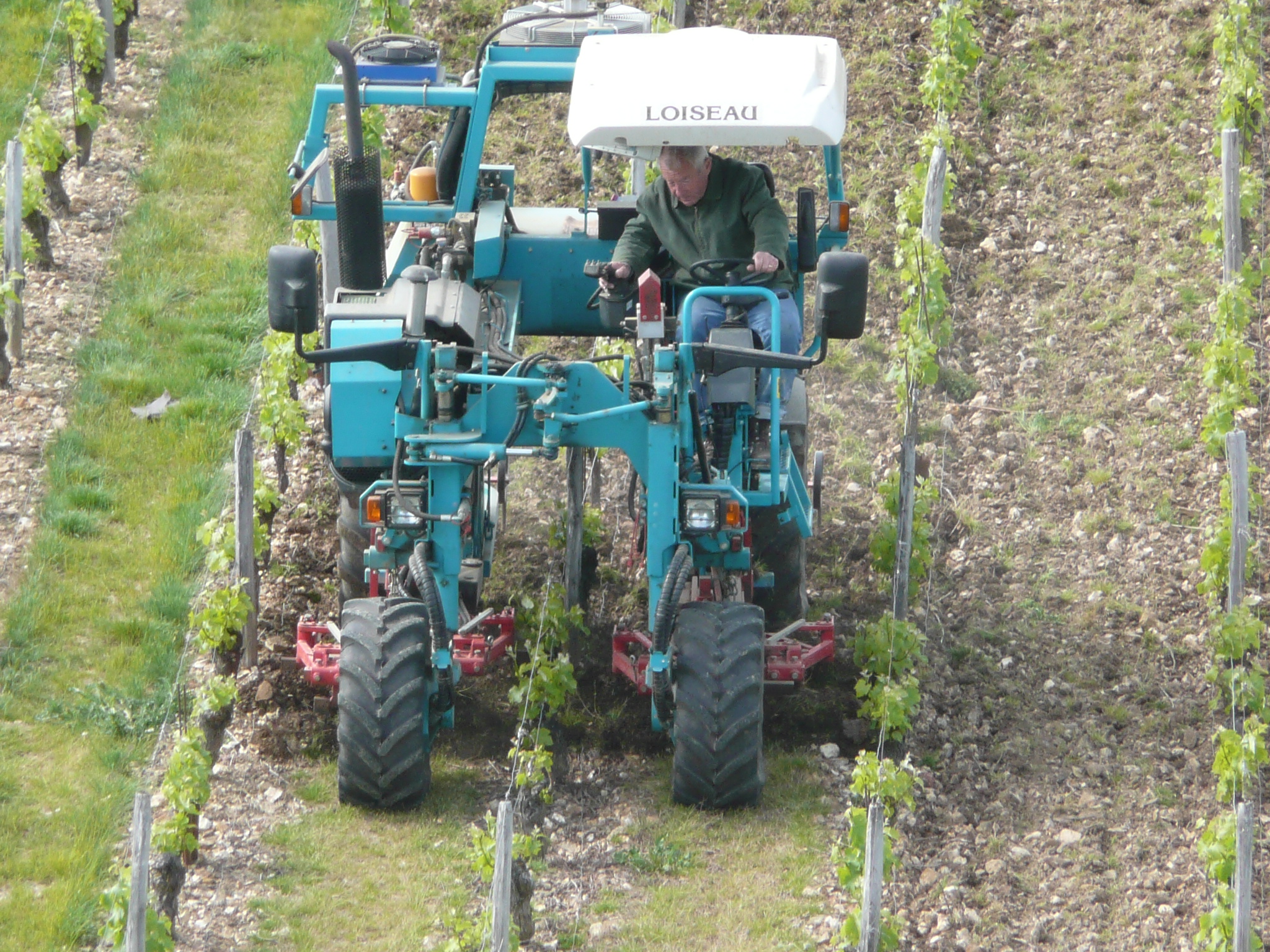
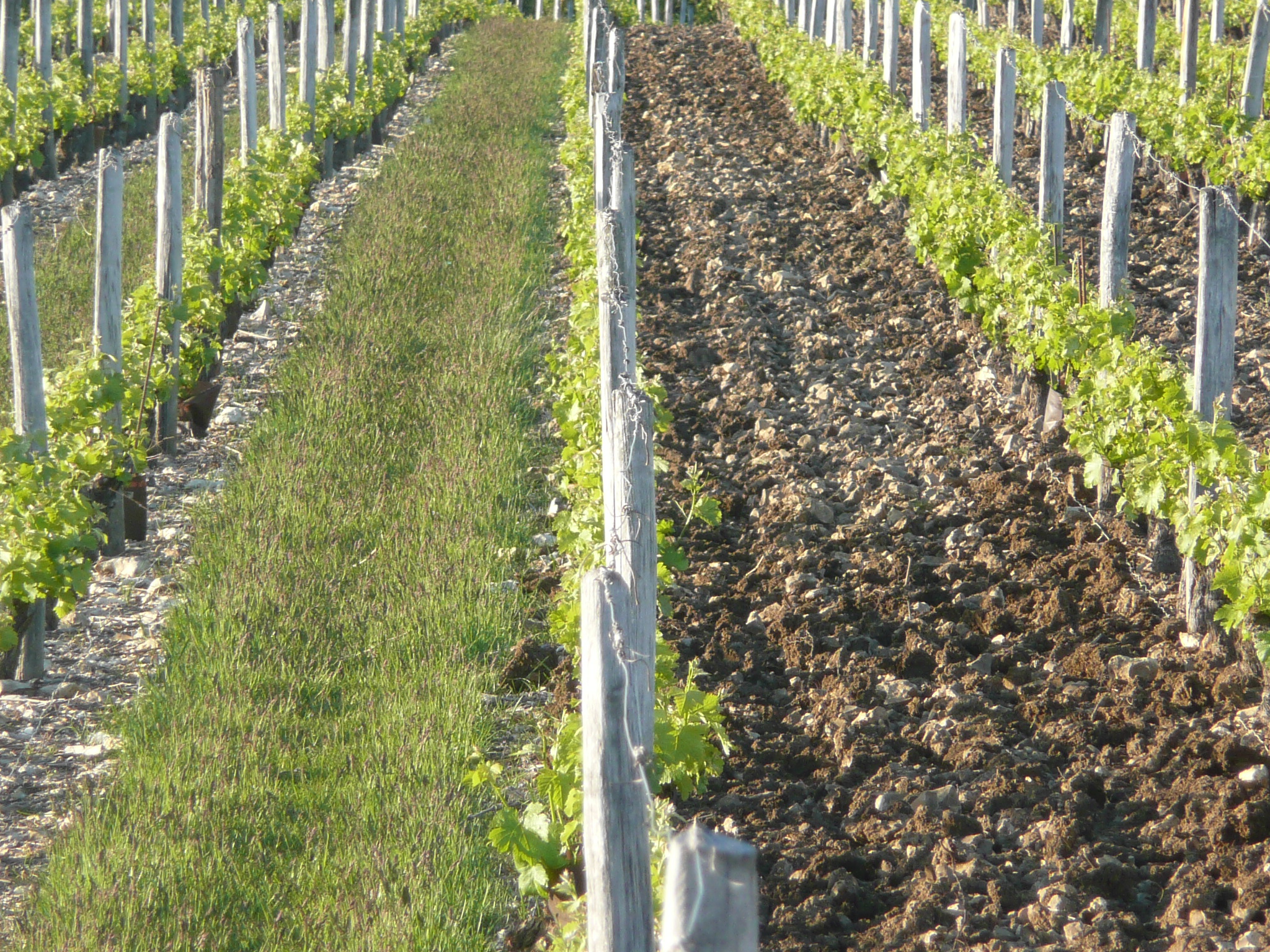
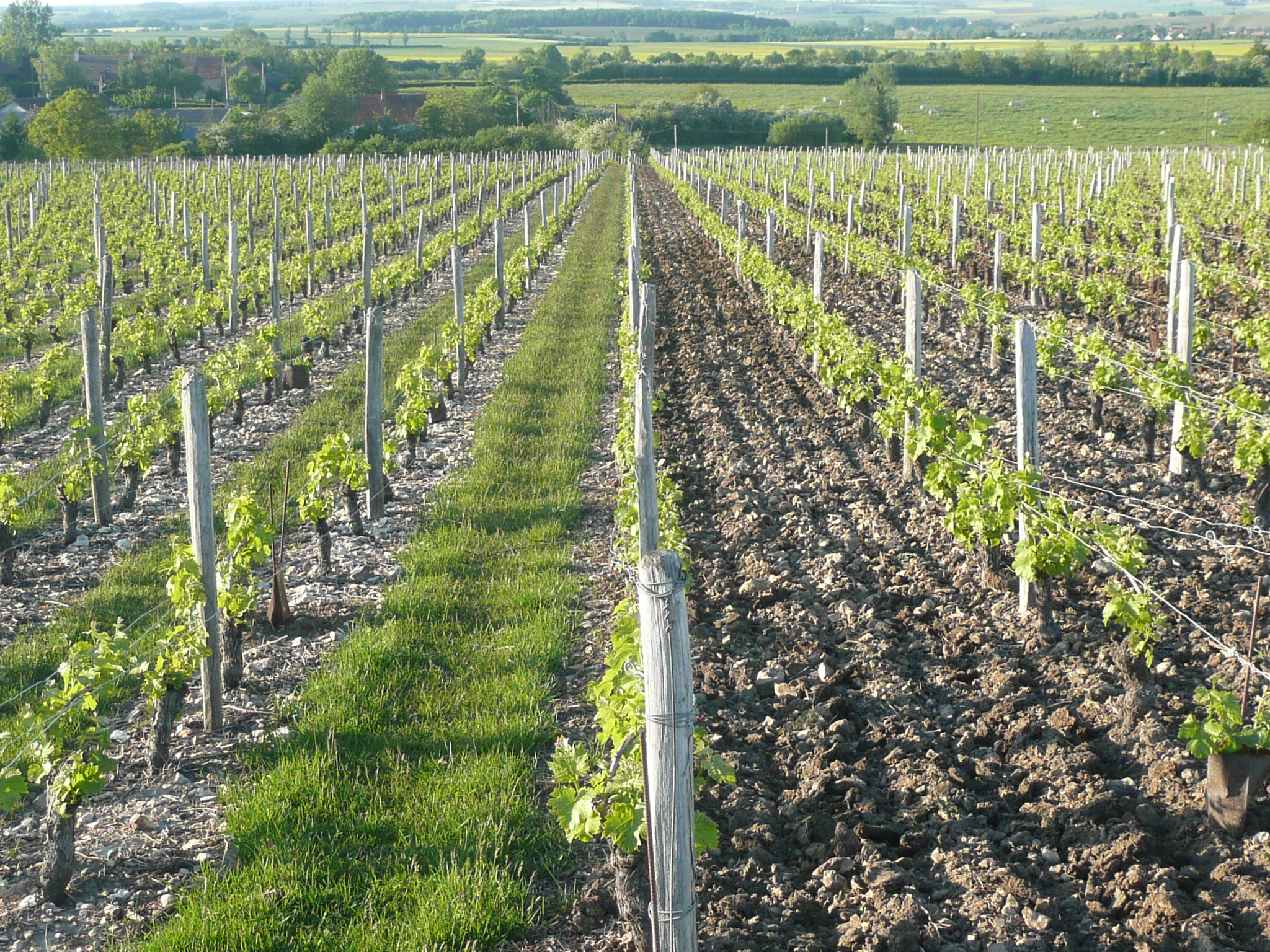
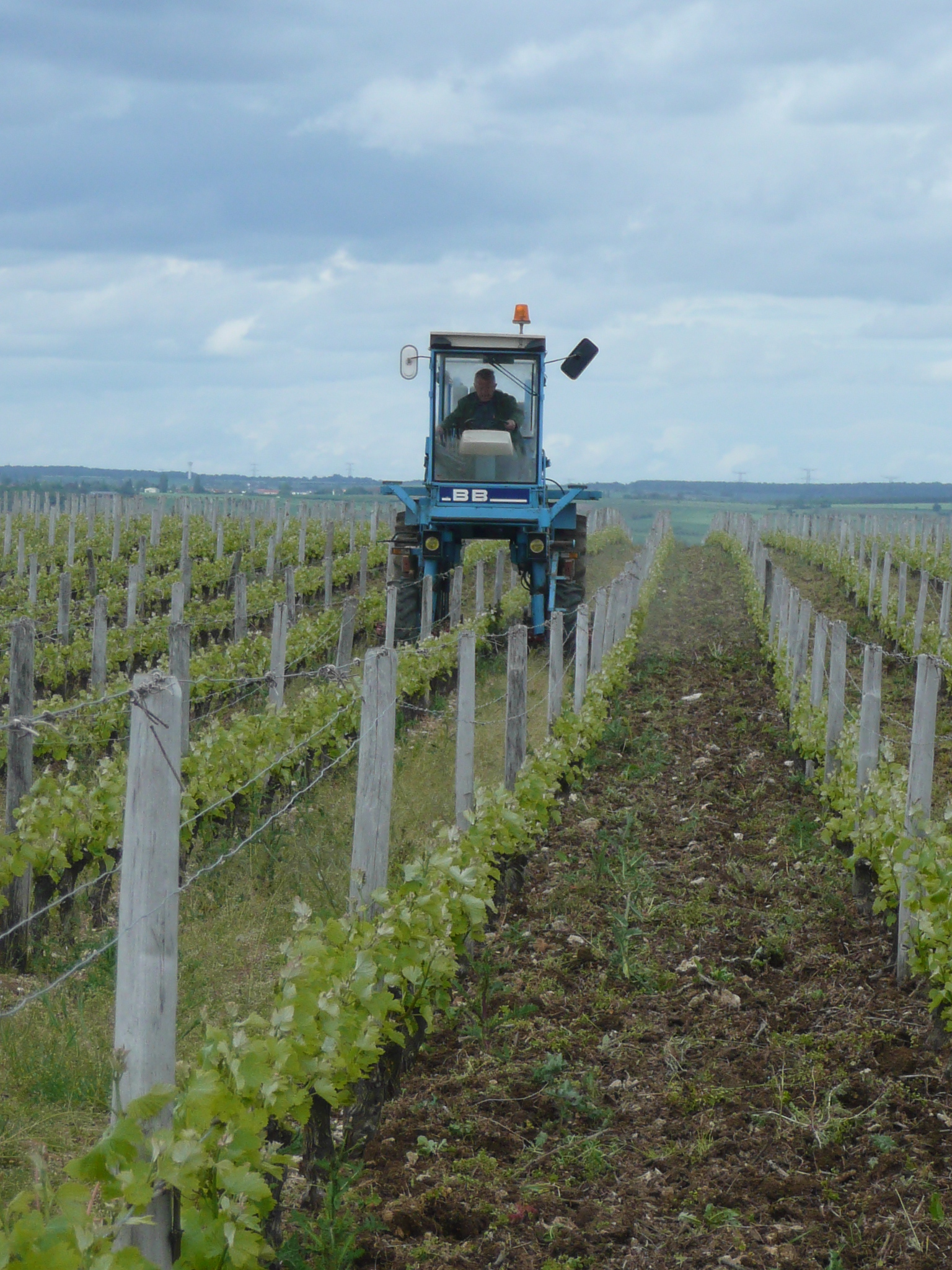
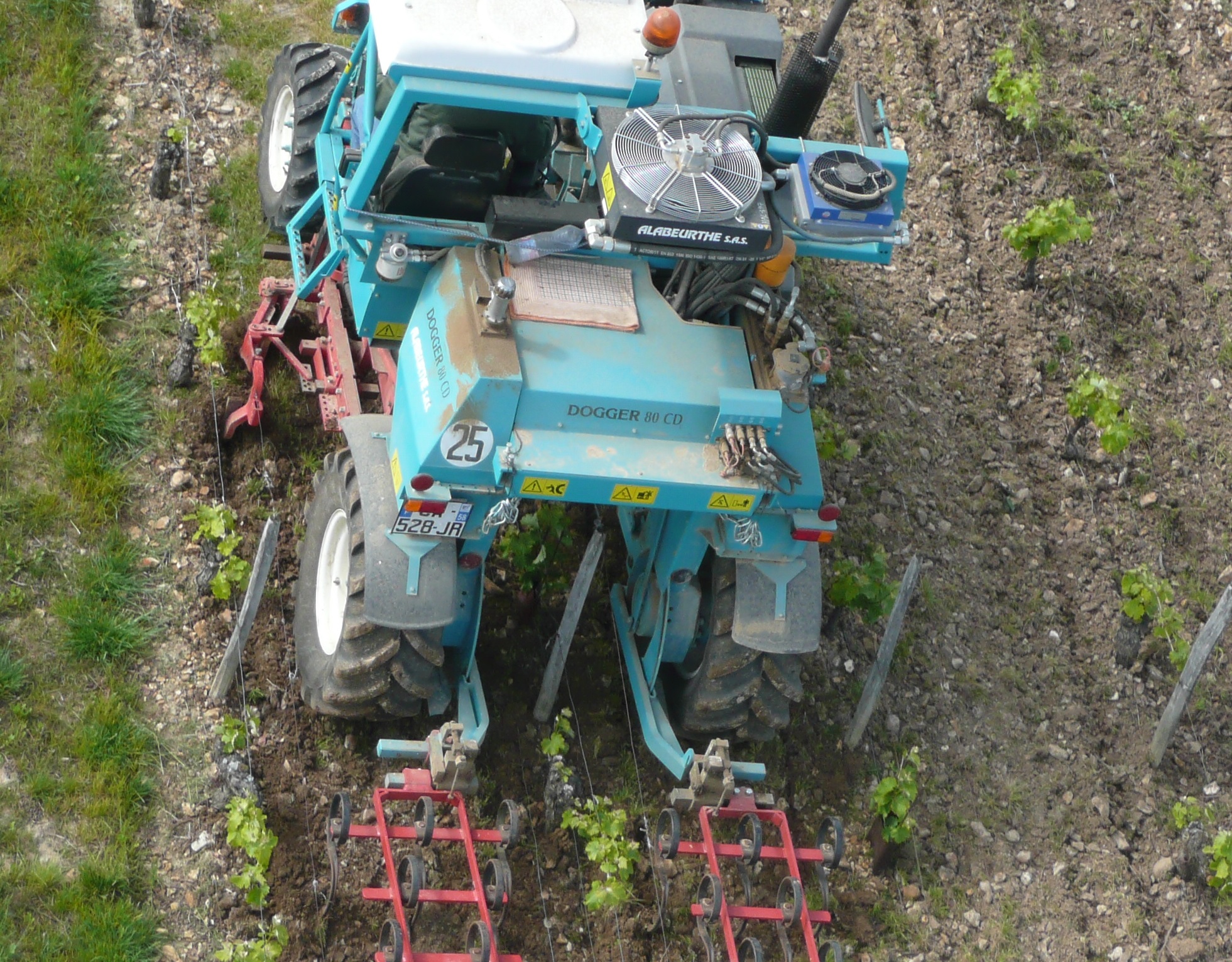
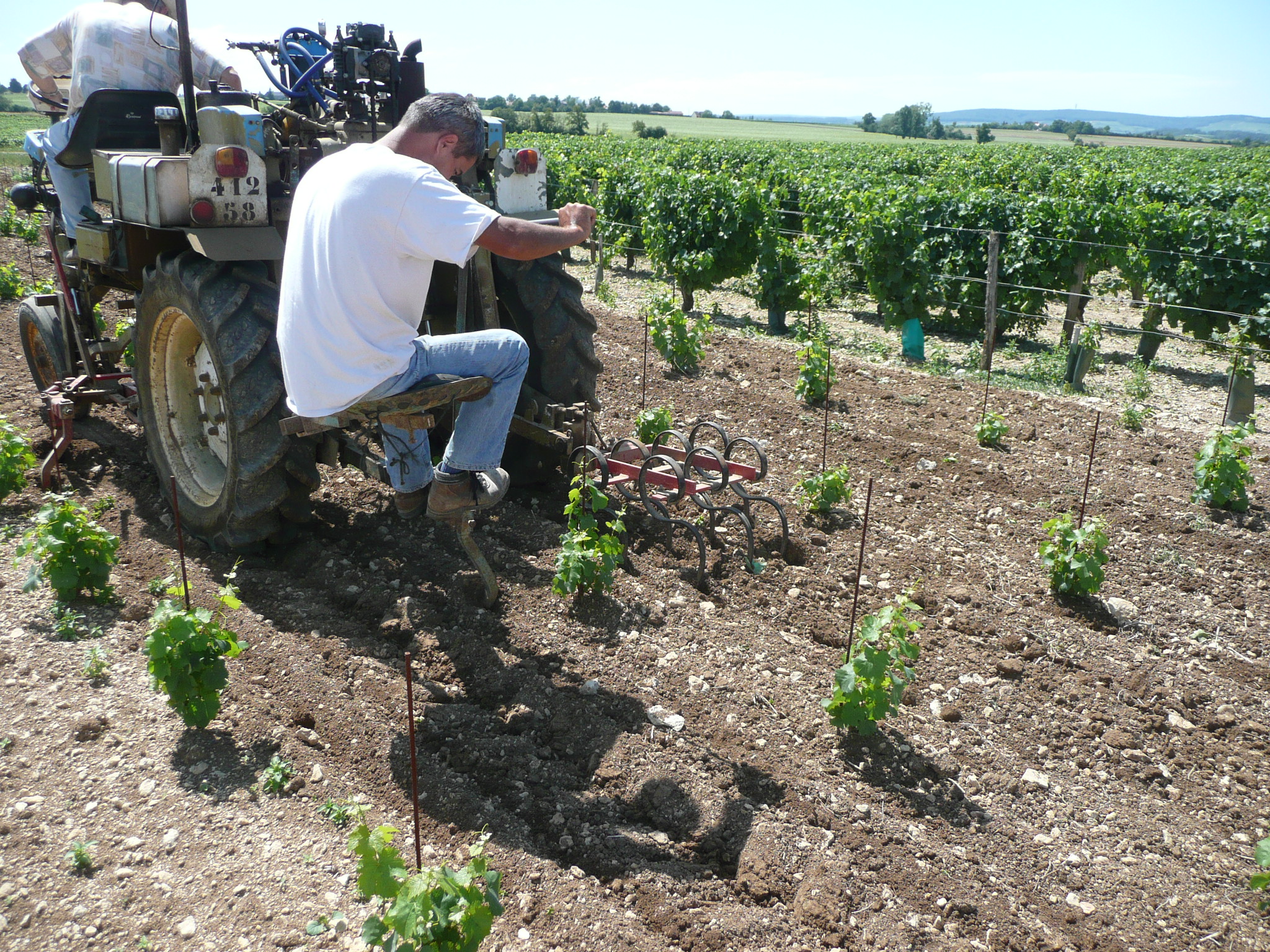
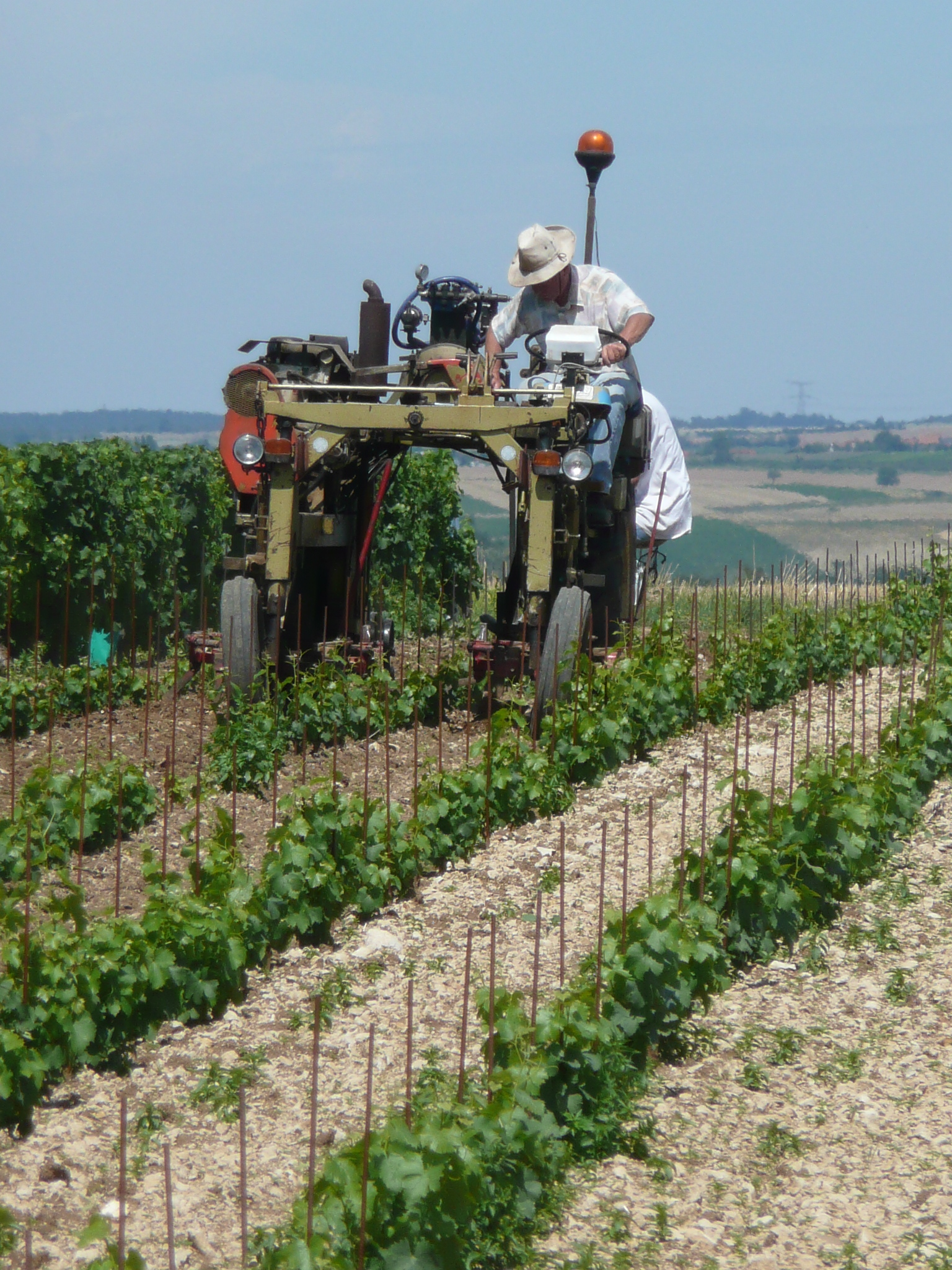
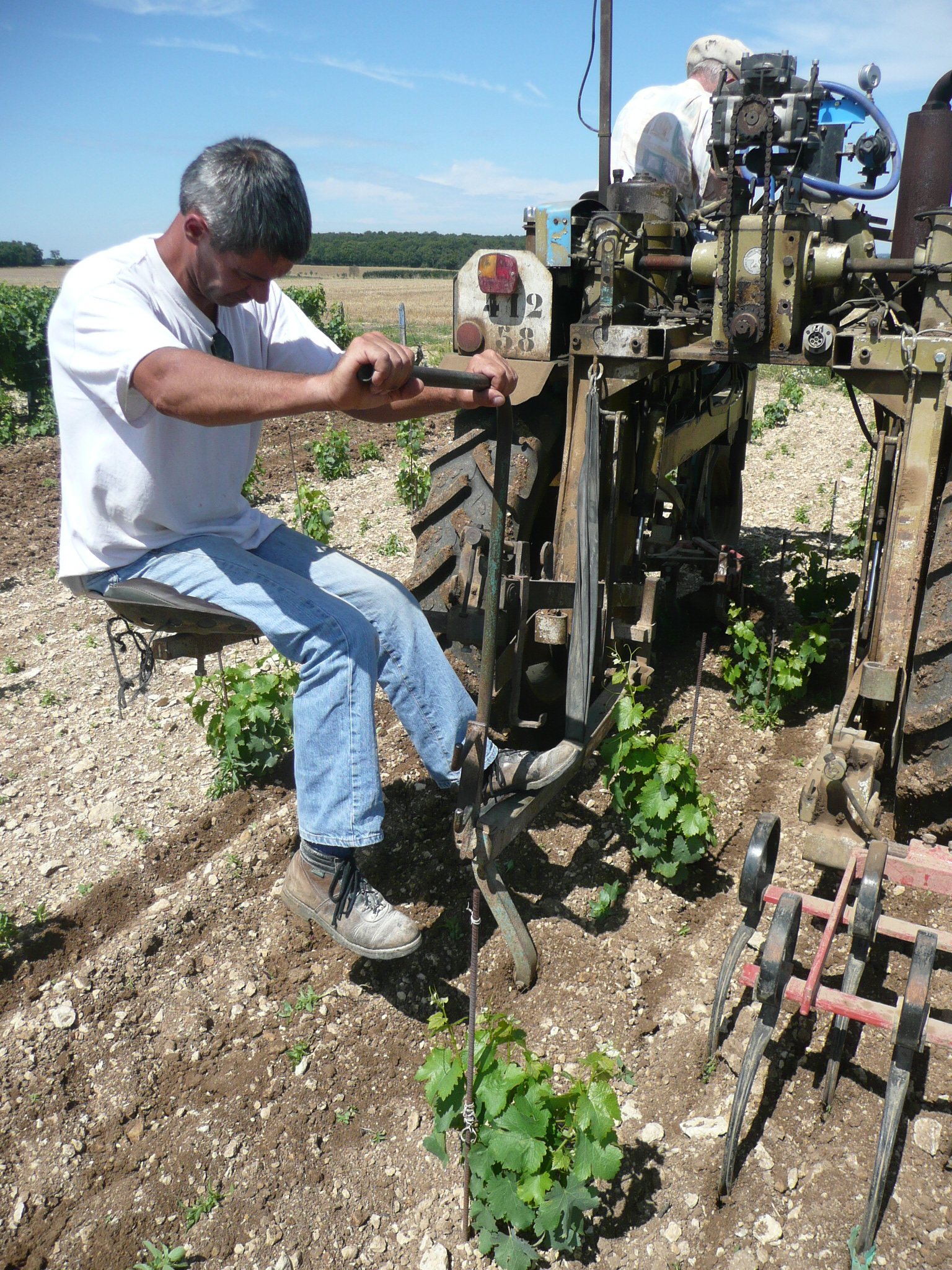
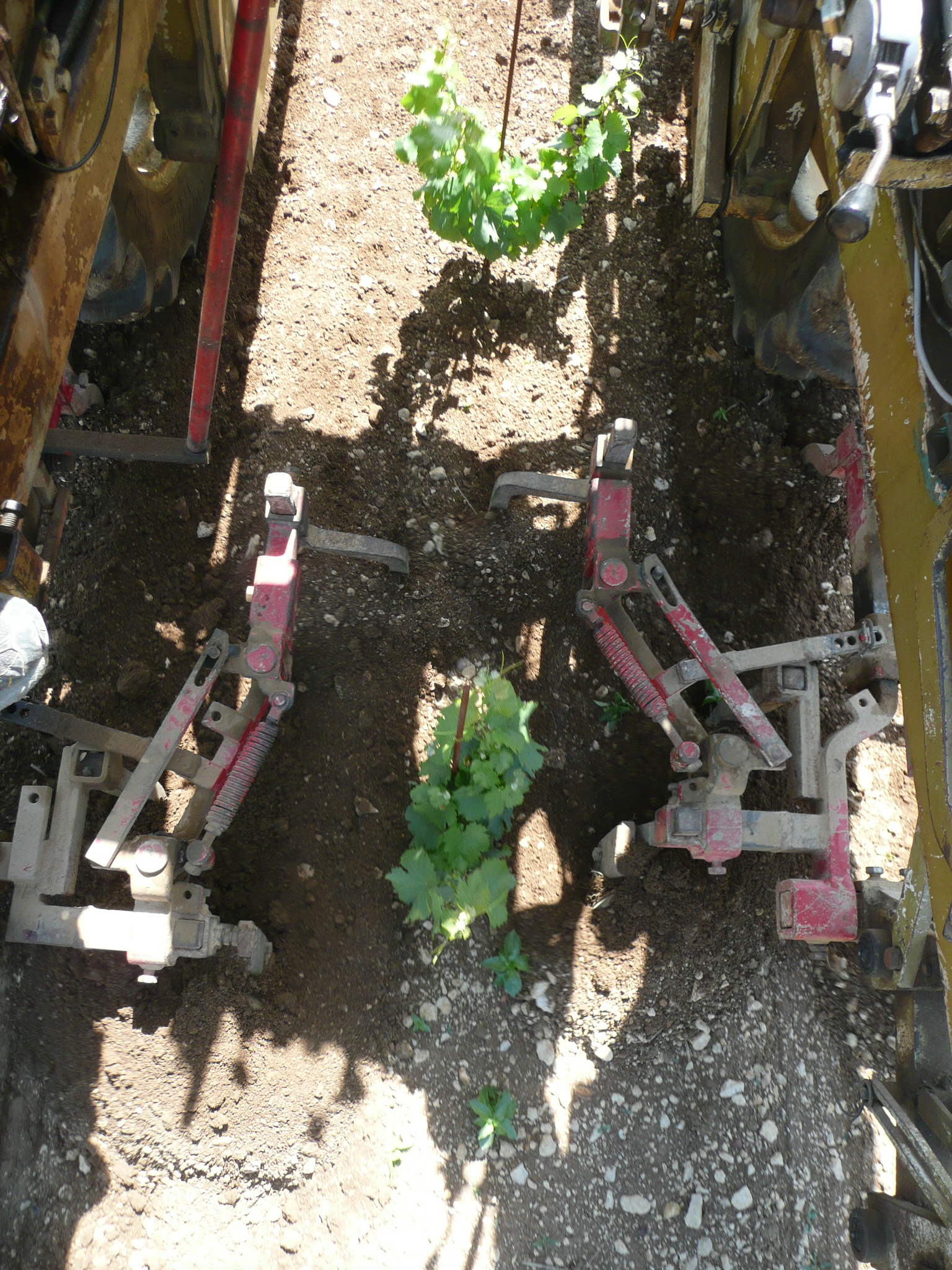
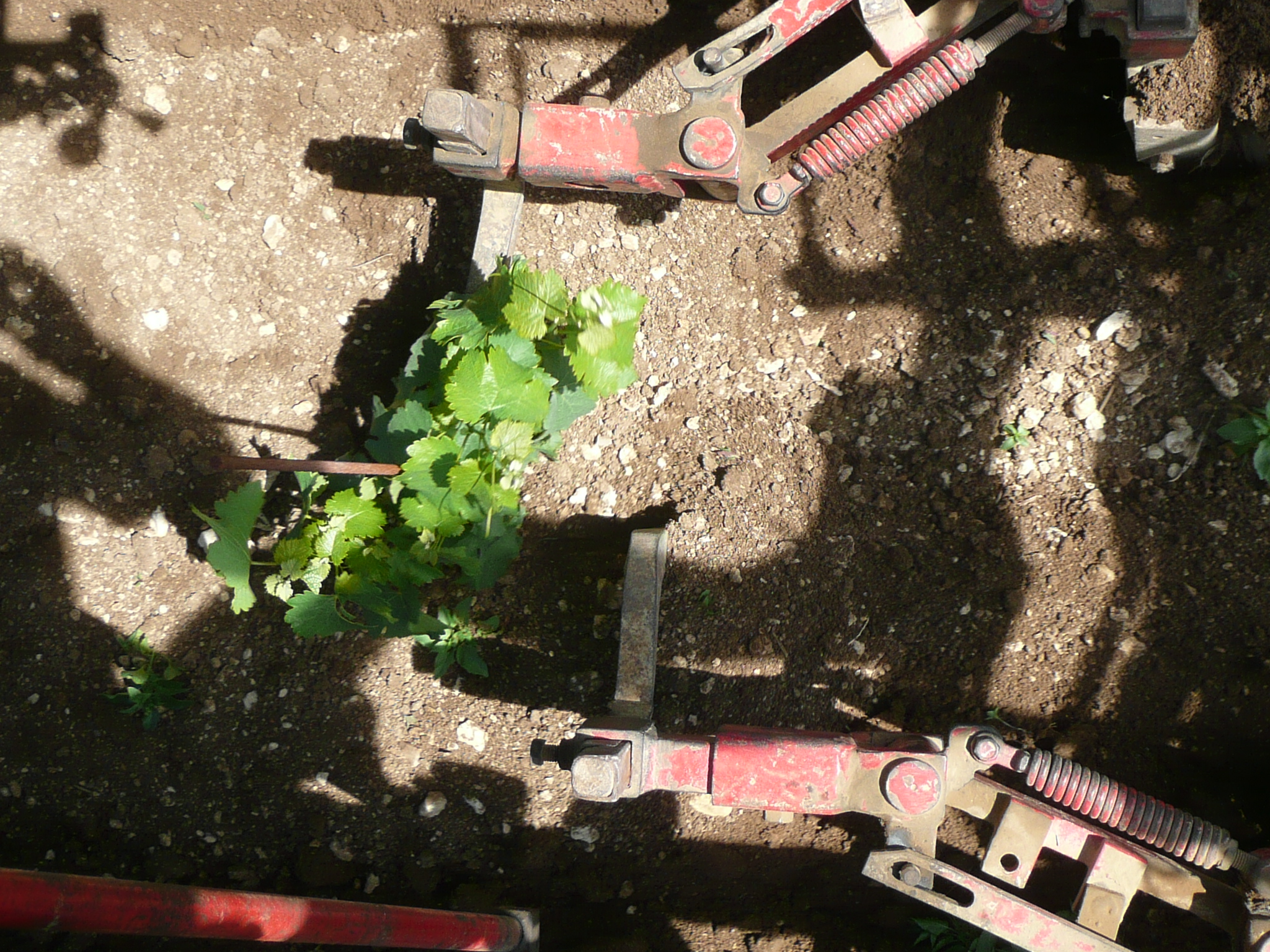
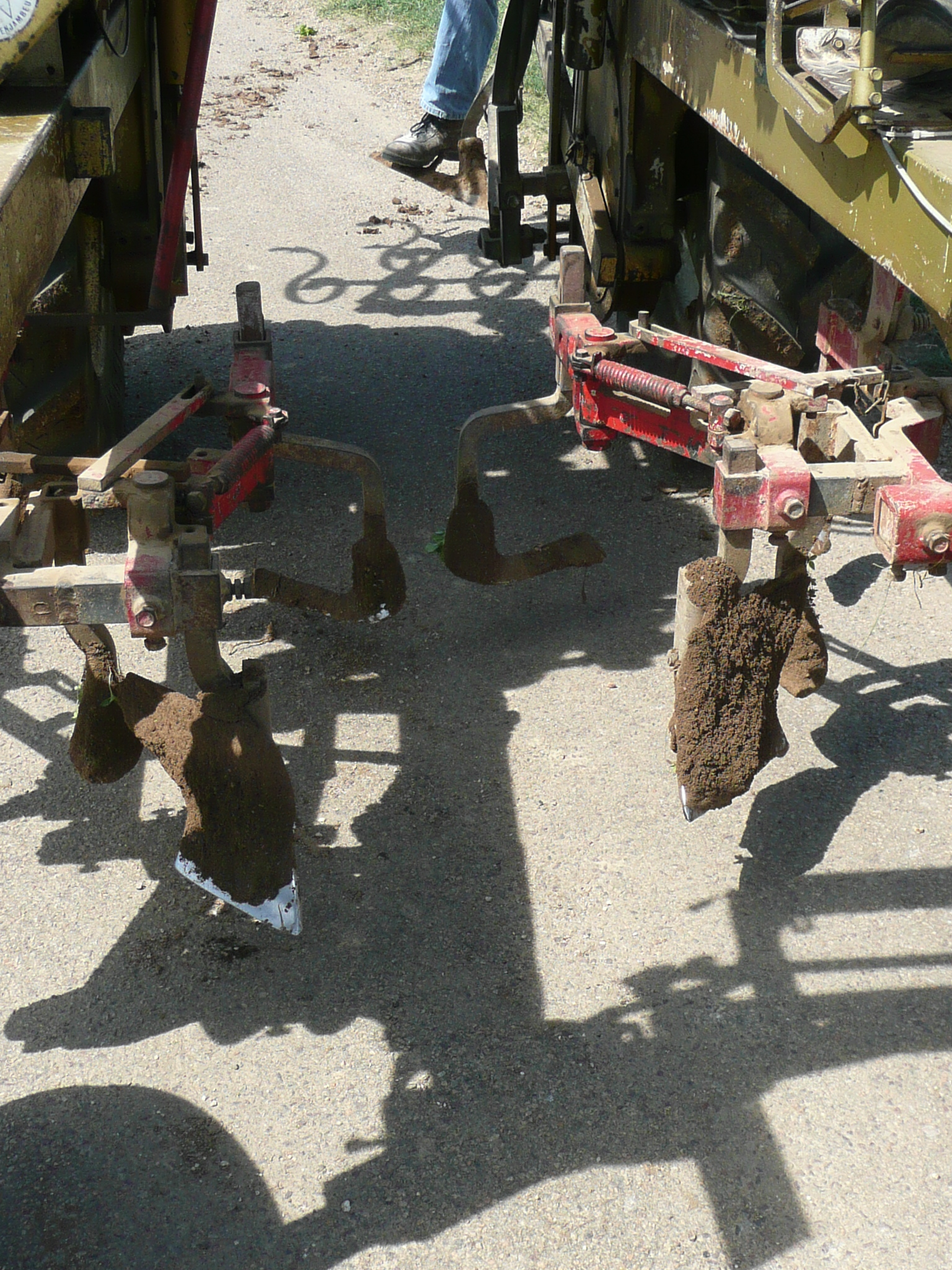
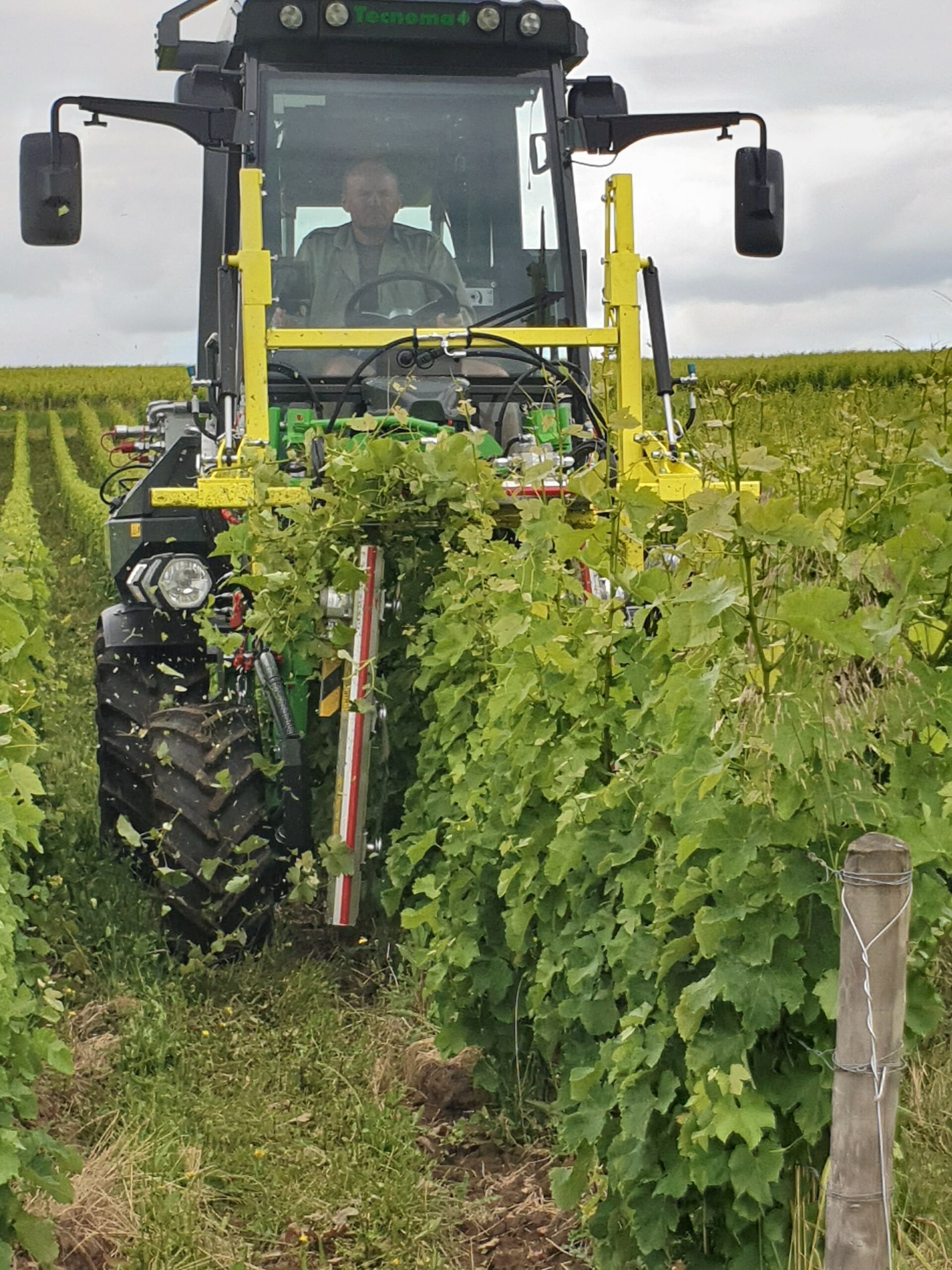
Hoeing is an essential step in maintaining vineyard soil. As shown in our photos, this involves passing over the soil with grubbers: the red attachments protruding from the tractor. These tools loosen the soil between the rows, aerate the earth and promote microbial life. This initial work also breaks up any crusts on the surface and prepares the soil to receive future rainfall or organic amendments. It is a mechanical task carried out between the rows of vines, often at the end of winter to prepare the soil for a second pass with rasettes (blades for cutting weeds), which is carried out at a greater depth.
Meeting the pickaxe user
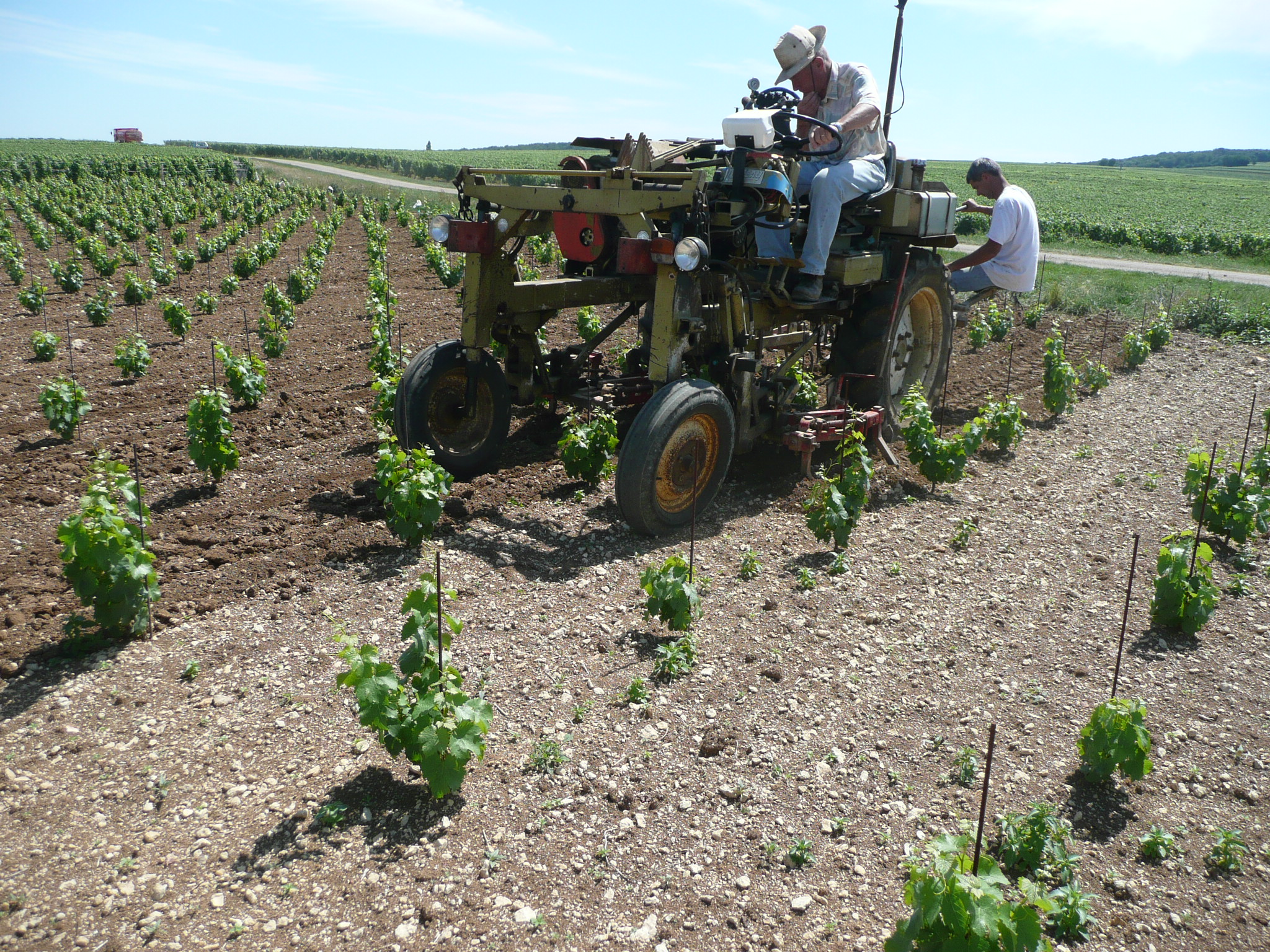
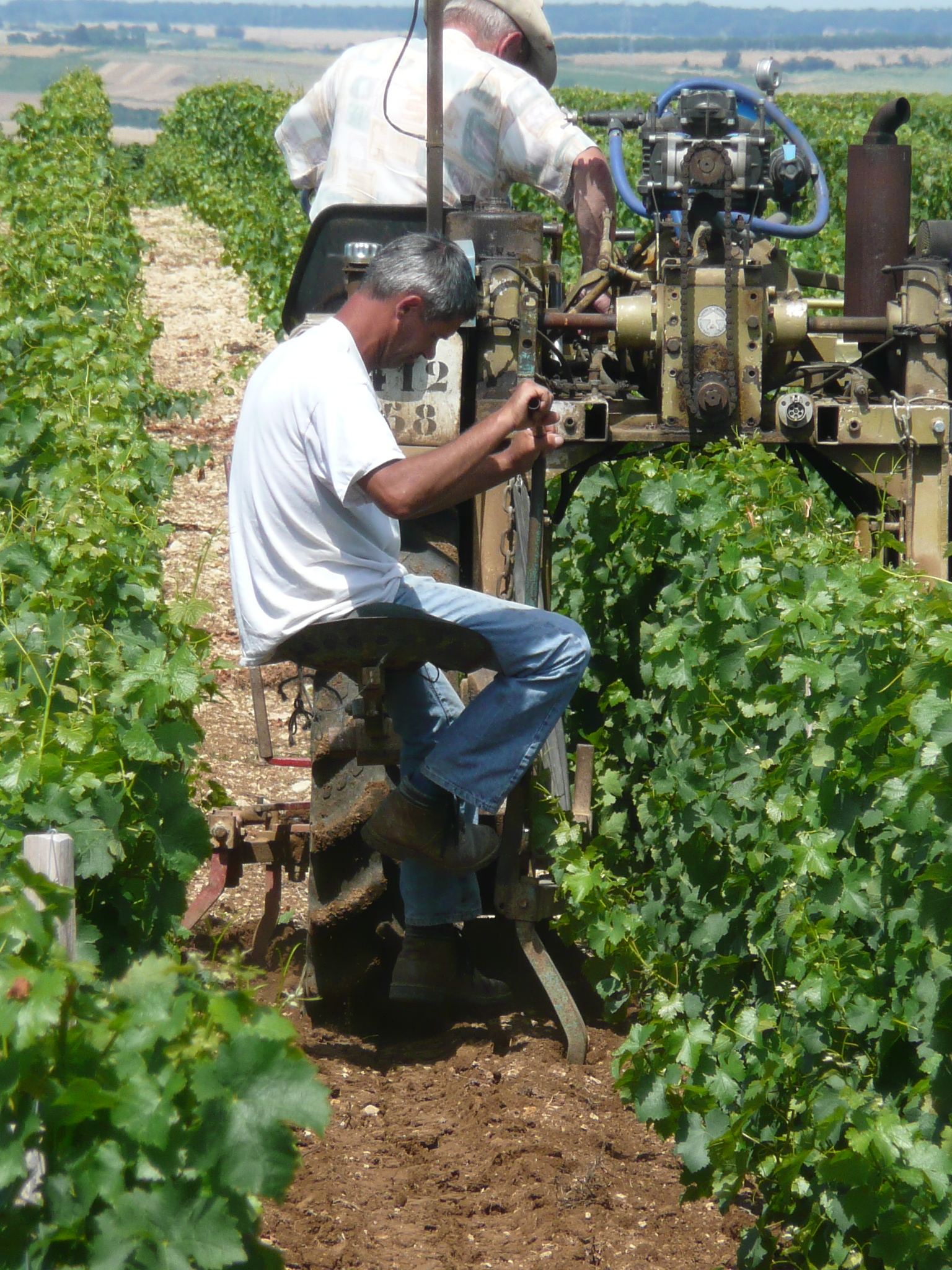
After loosening the soil, we carry out mechanical weeding using hoes and a pickaxe, particularly for young plants. This manual tool is equipped with flat blades designed to cut the root systems of weeds as close to the vines as possible. This work requires a great deal of coordination, so two people are needed: one to drive the tractor, while the other adjusts and guides the movement of the blades at the rear. The hoeing machine allows for more precise work than inter-vine cultivators as there is no risk of damaging young grafts or vines. This deeper hoeing, which complements the hoeing work between rows, is very demanding but also very effective in keeping the soil clean, alive and well balanced.

Green harvesting
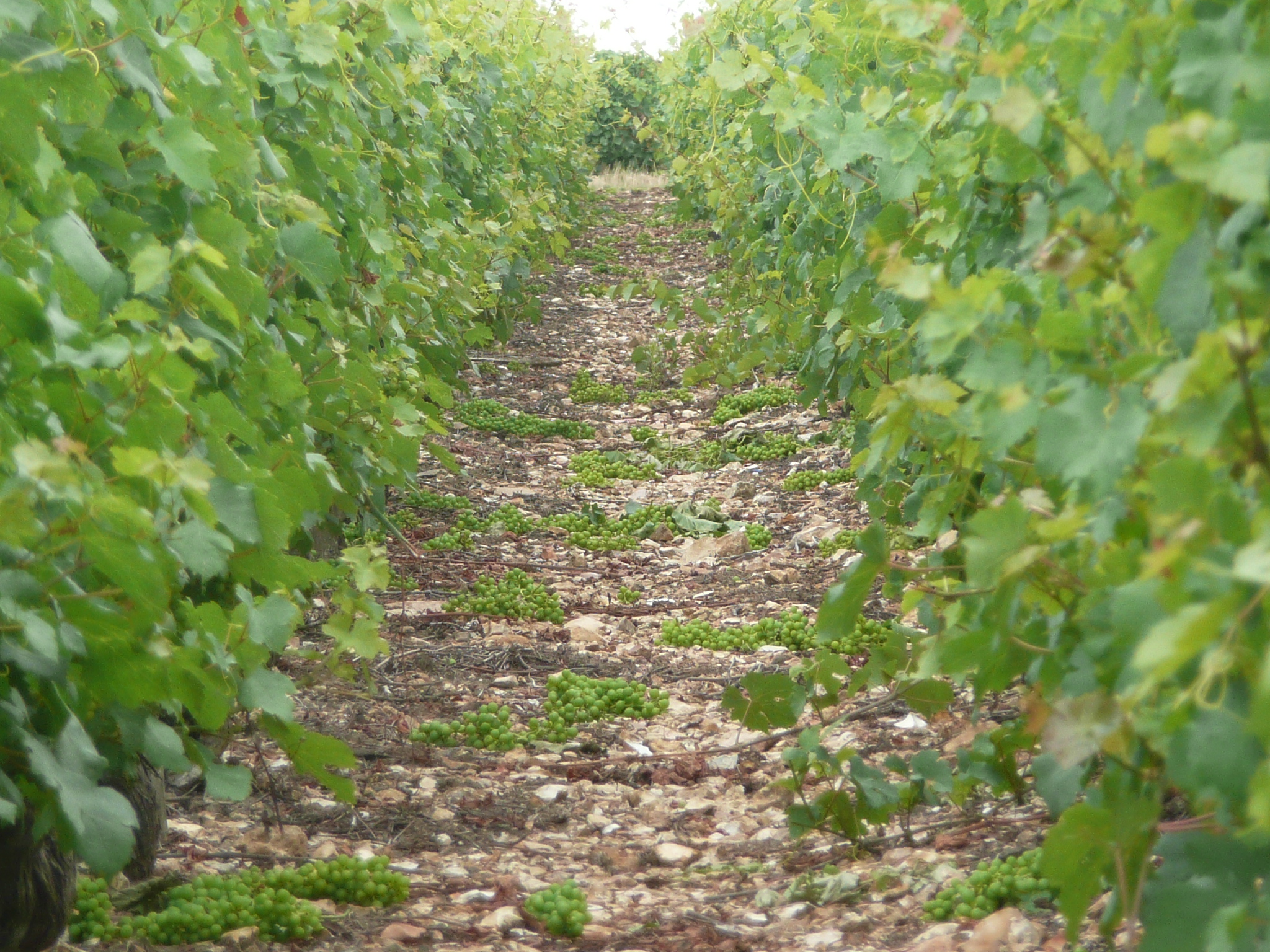
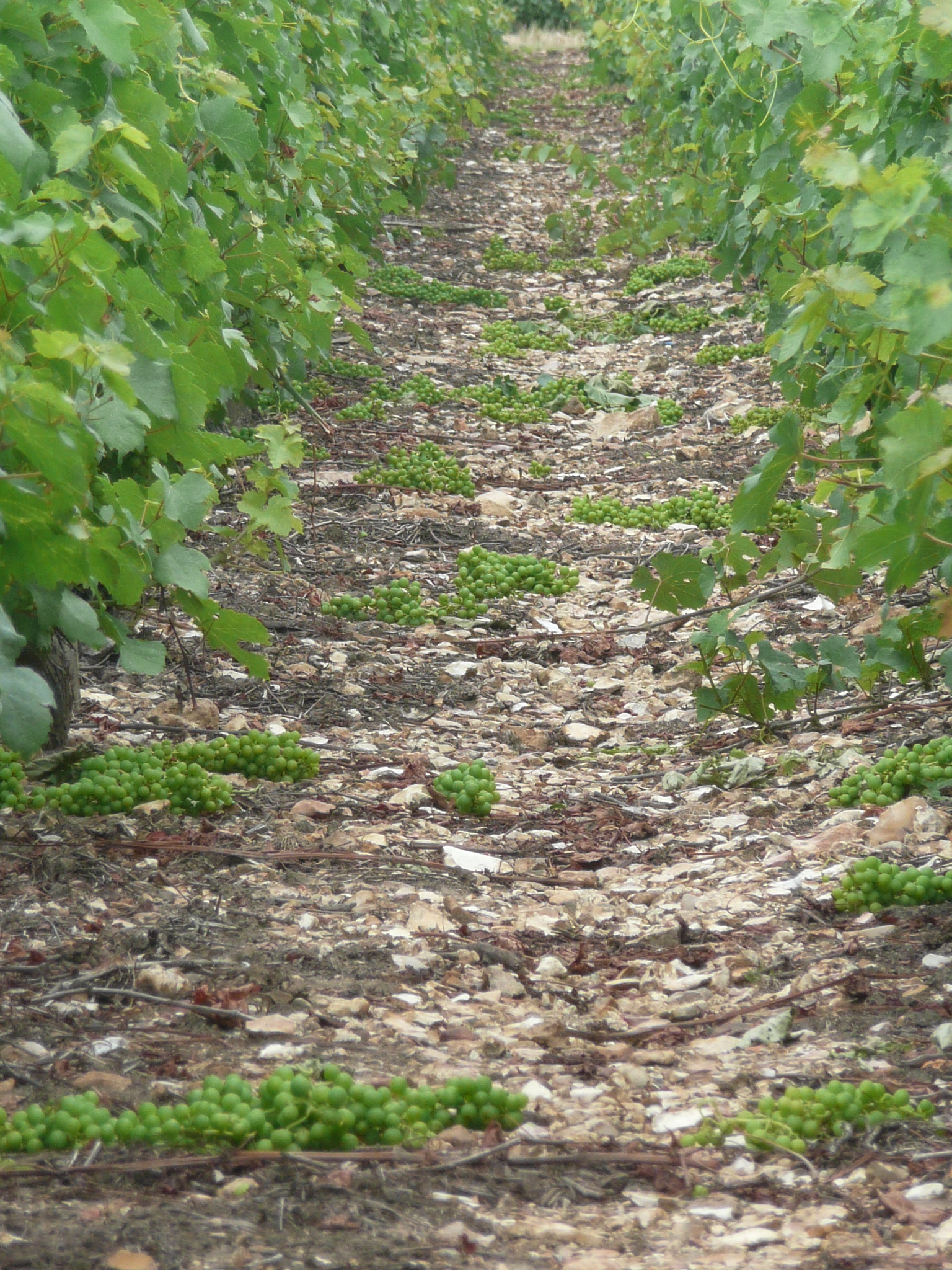
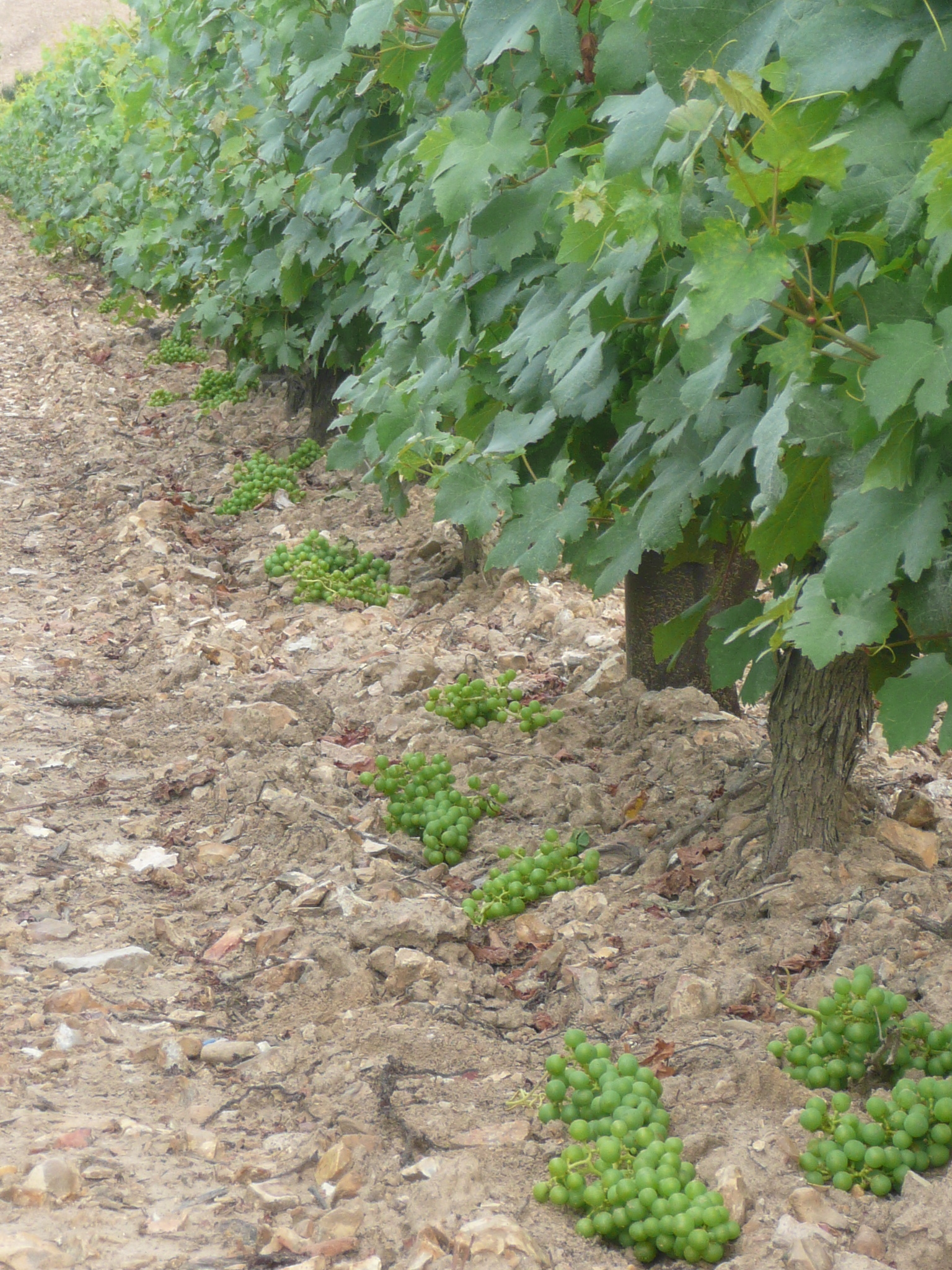
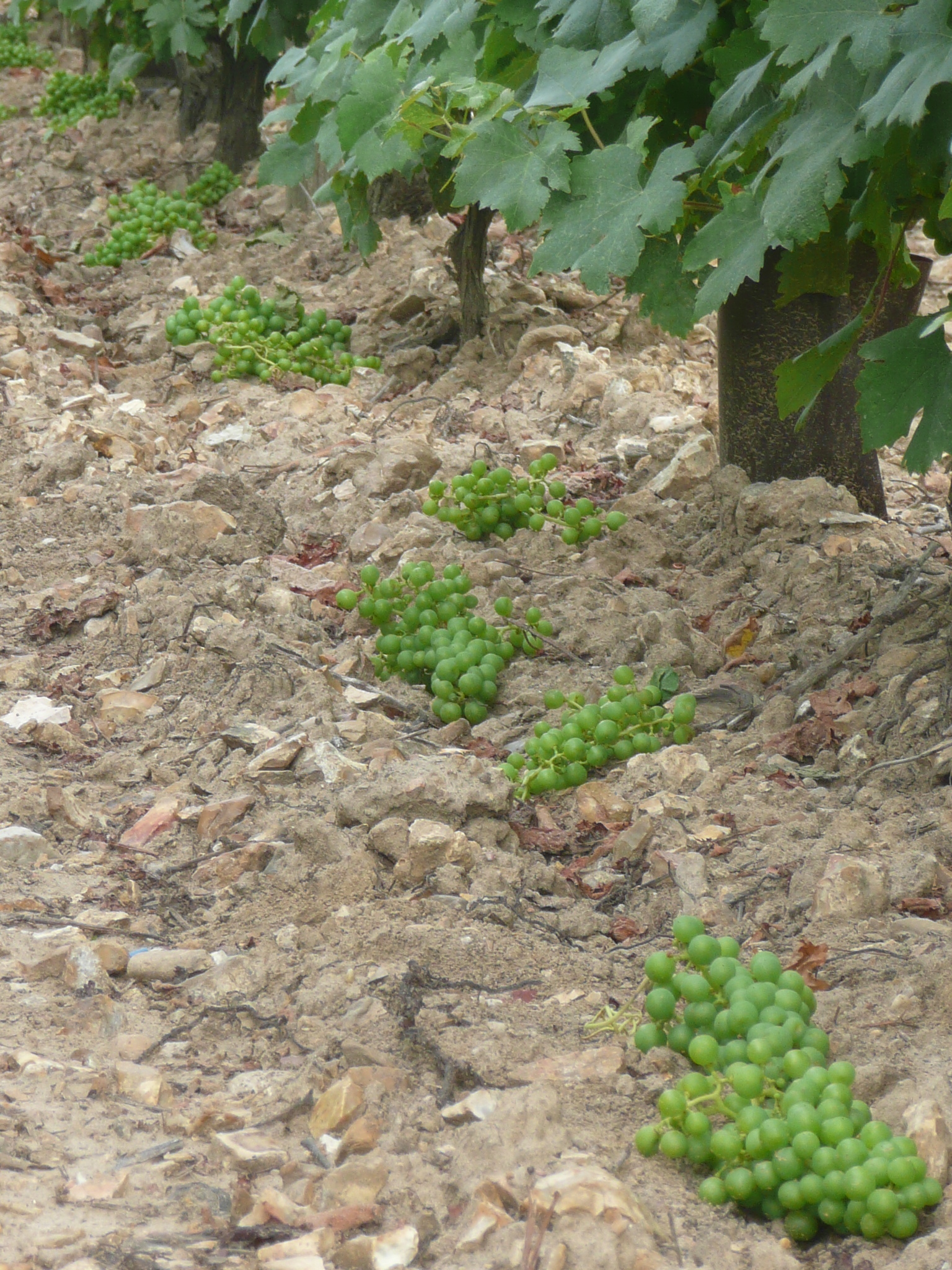
Green harvesting is a specific practice that is used less frequently. It only takes place when the year warrants it, which is quite rare. Since 1995, only one such intervention has been necessary: in 2004, some of the grapes had to be removed before harvesting because the vines showed too high a production potential. This operation consists of removing some of the developing bunches in order to lighten the load on the plant and ensure better concentration in the remaining grapes. Although visually impressive and sometimes considered aesthetic, this practice is not part of the estate’s philosophy, which favours a natural balance in the vines without systematic intervention.


The grape harvest season
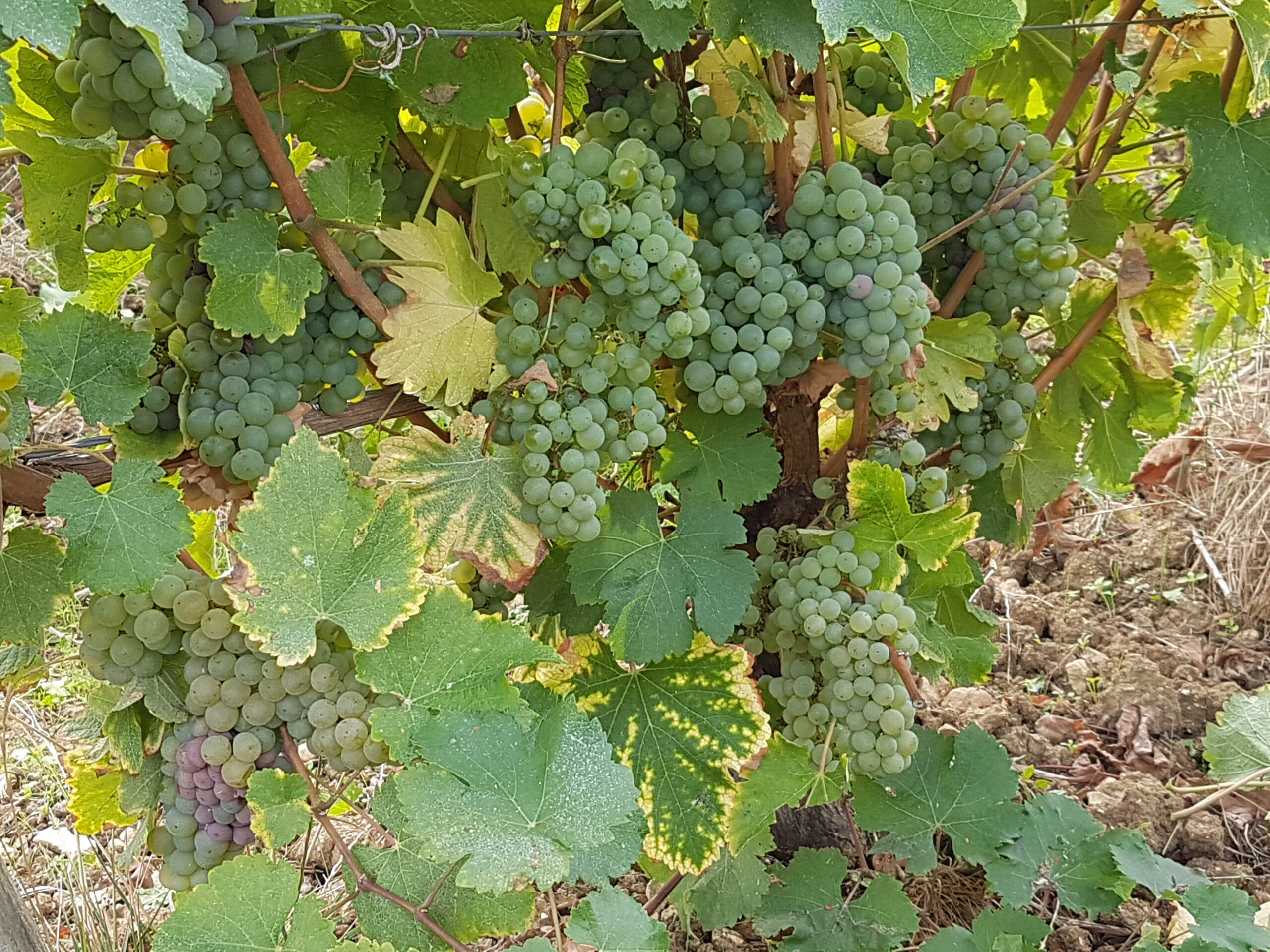
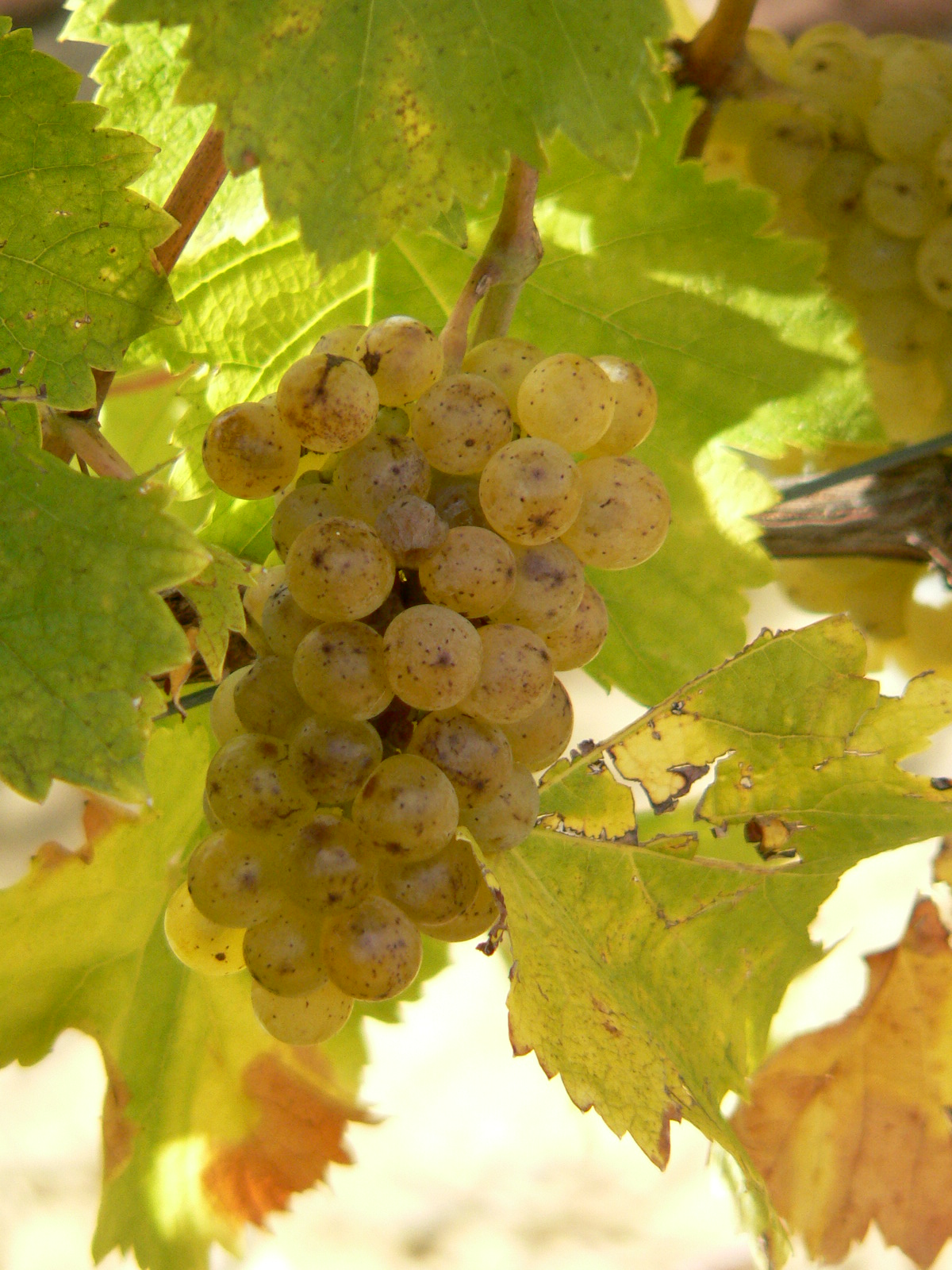
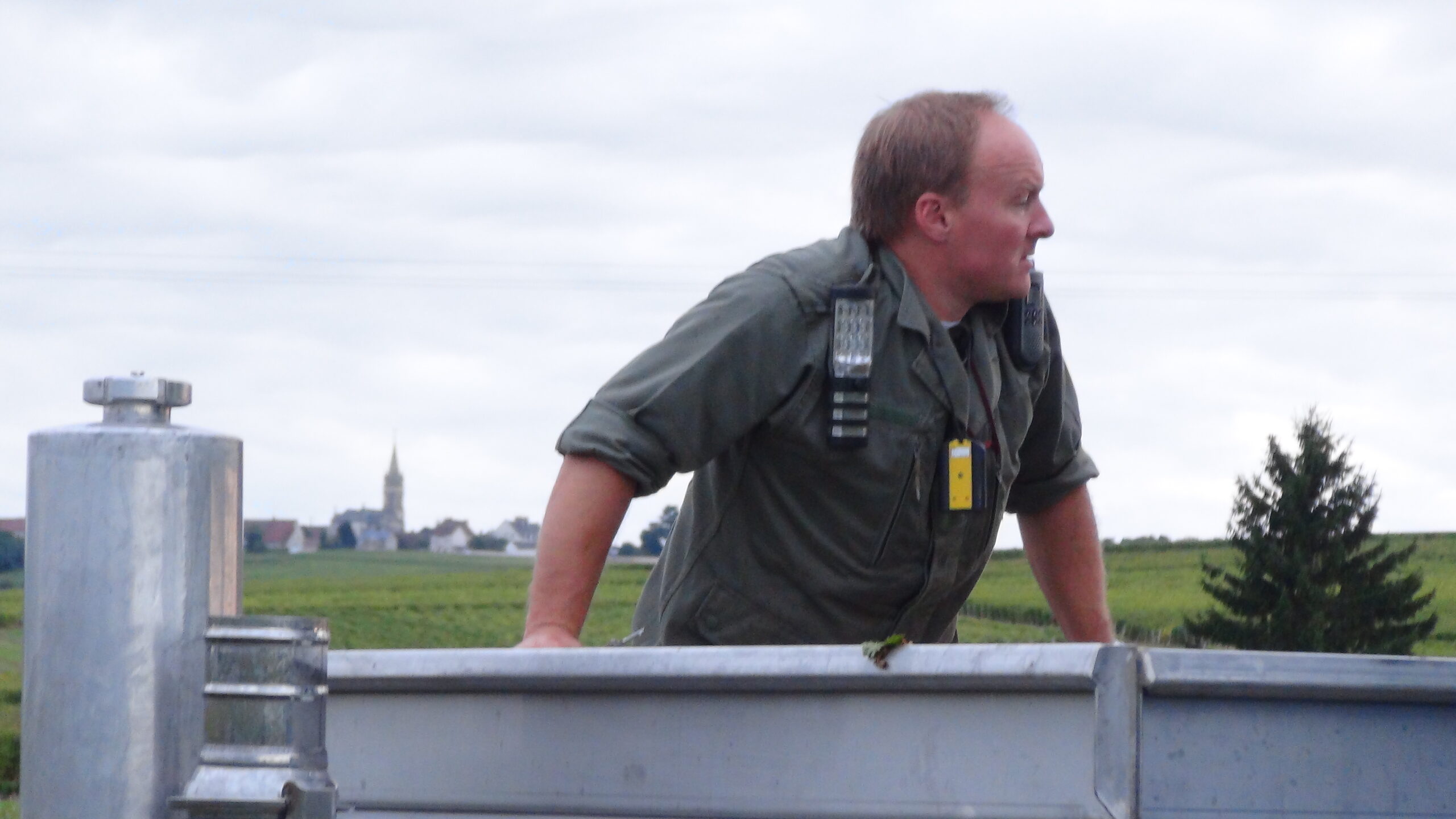
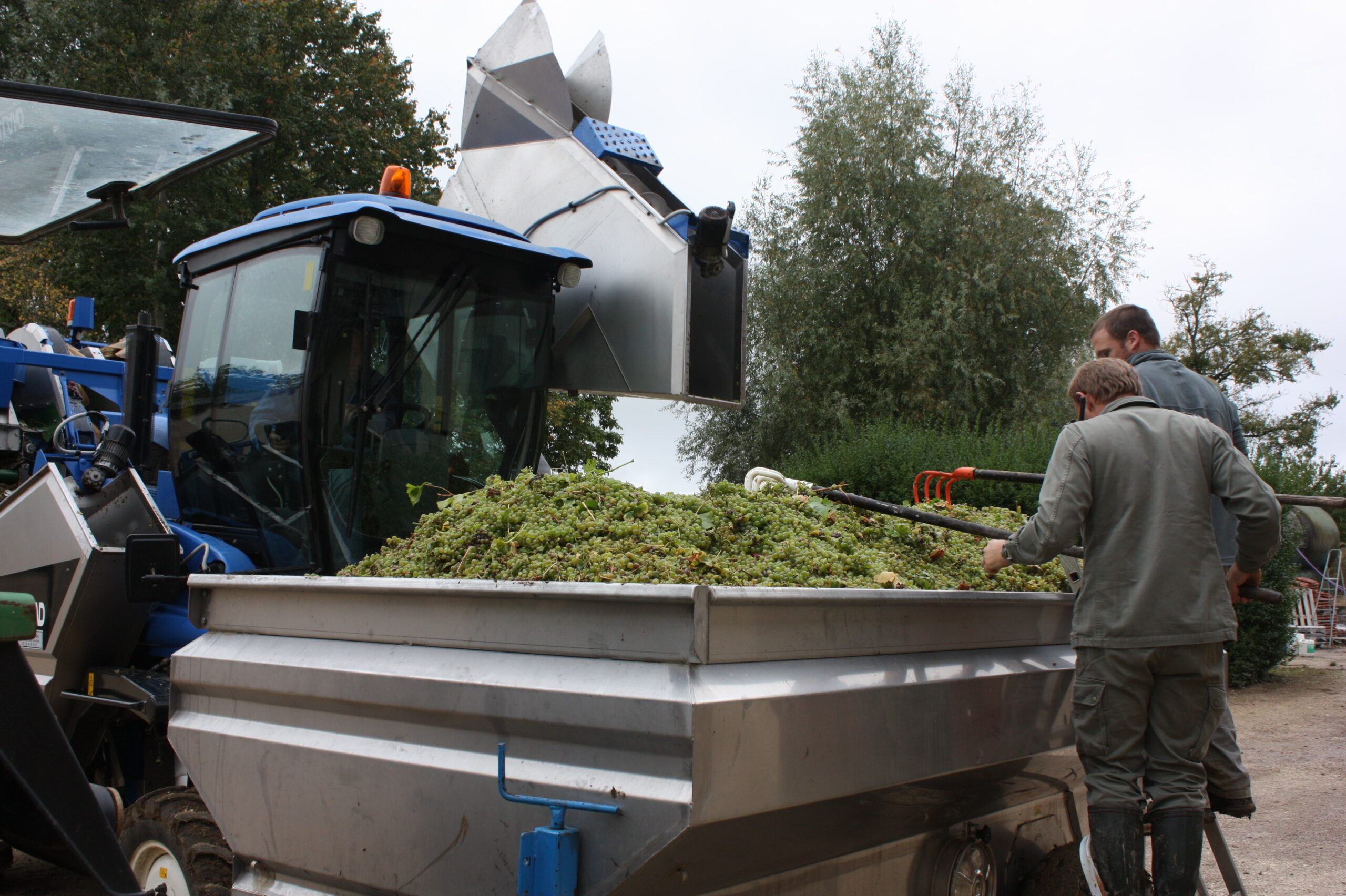
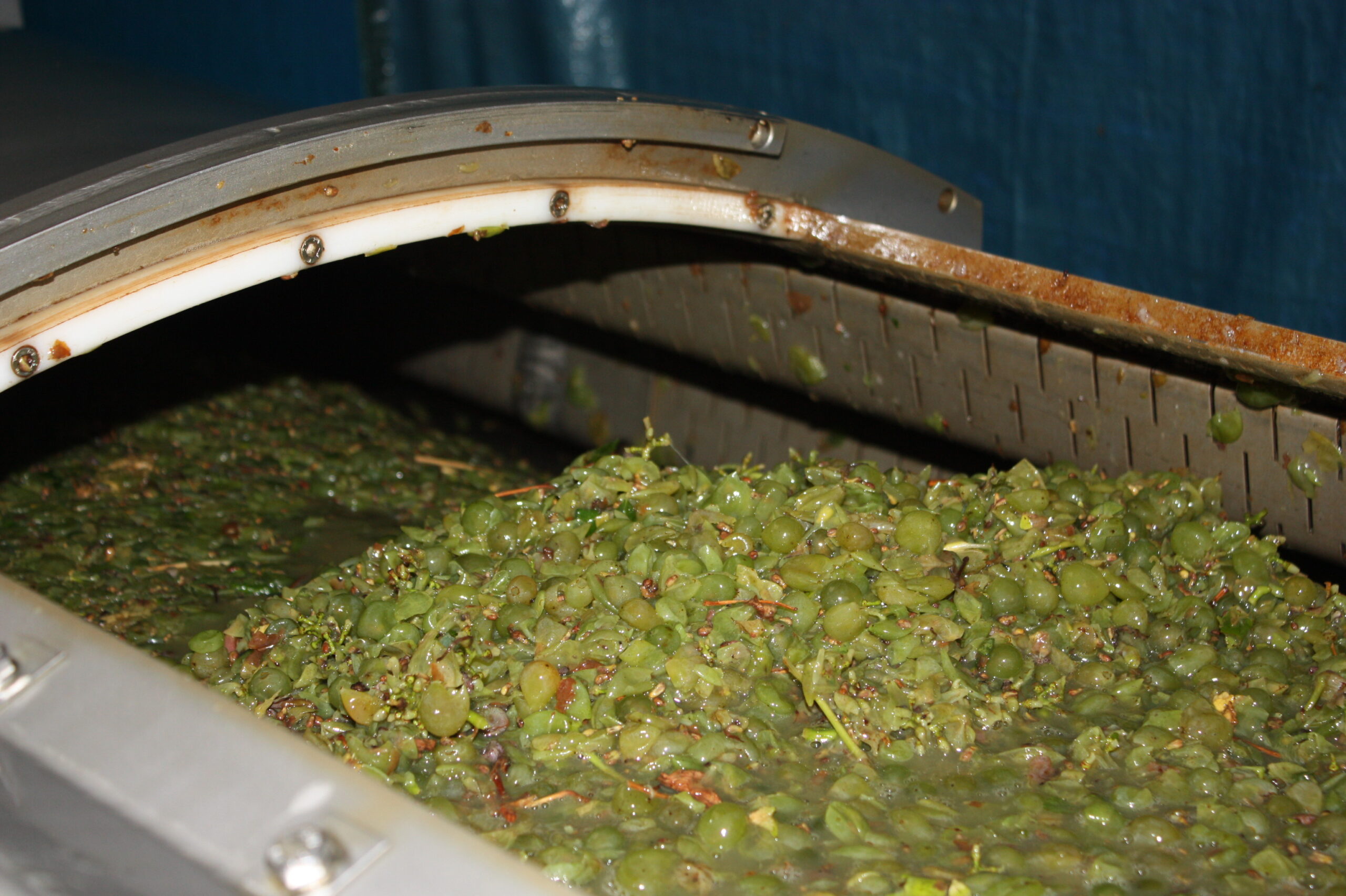
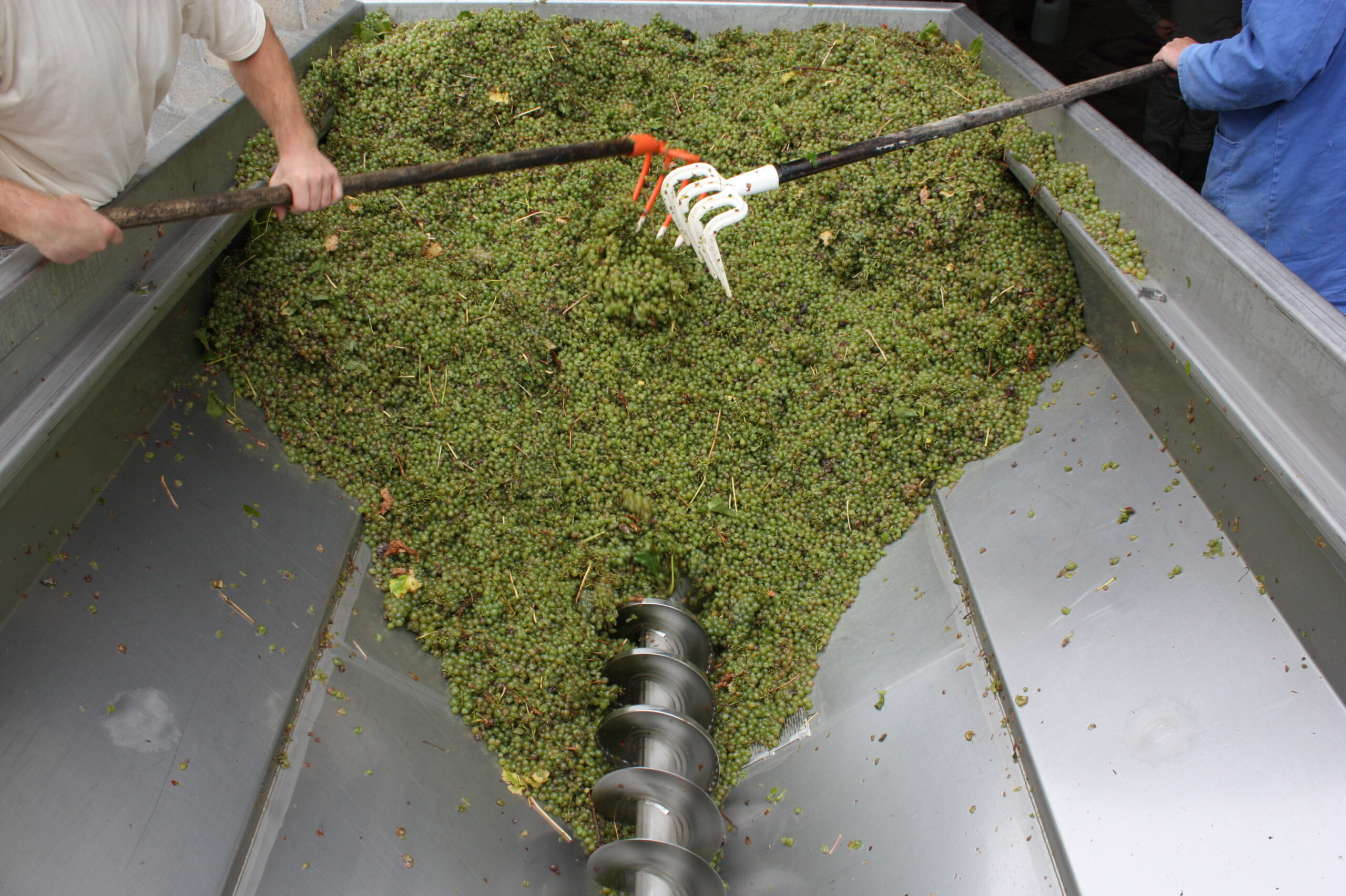
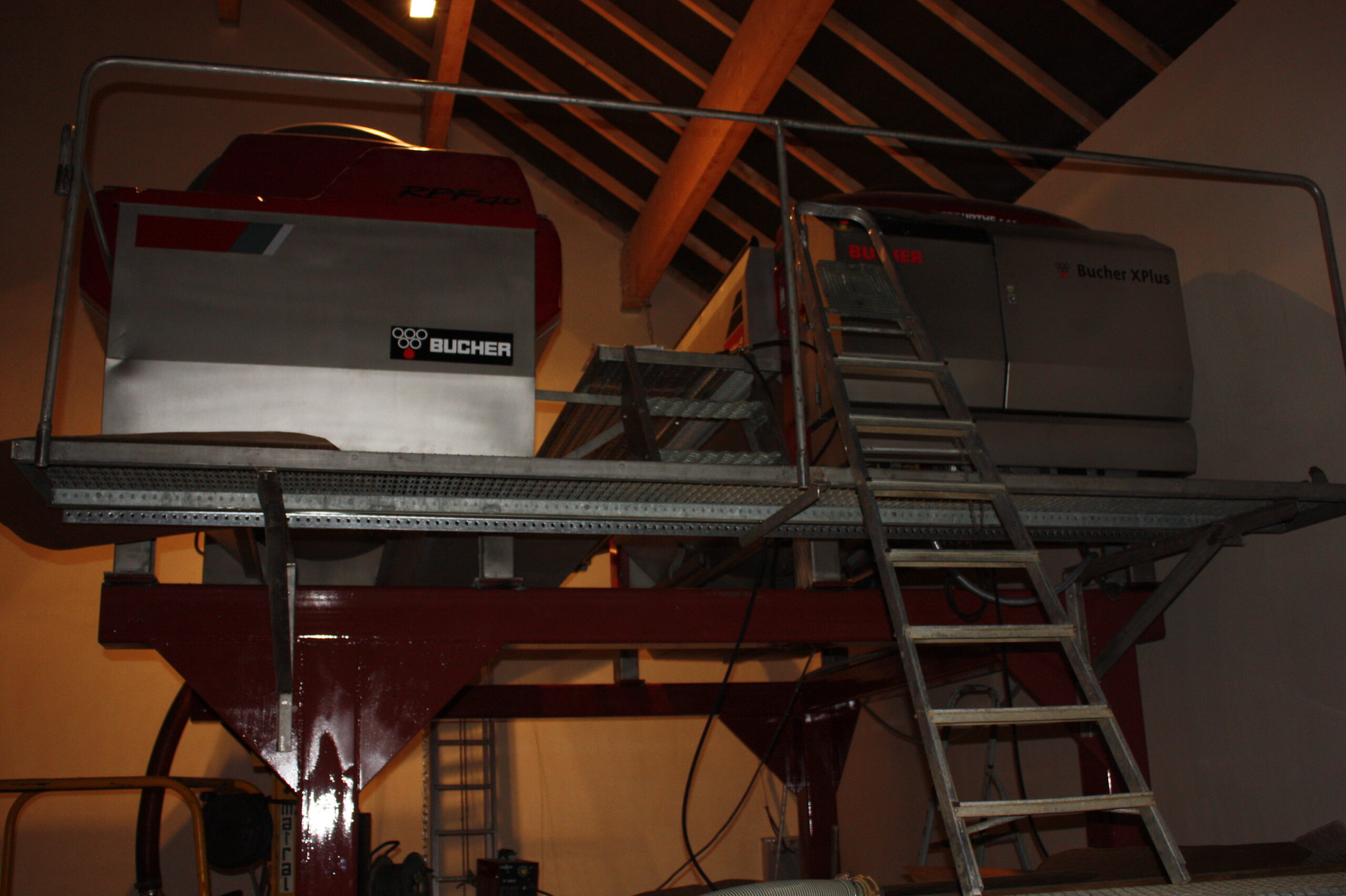
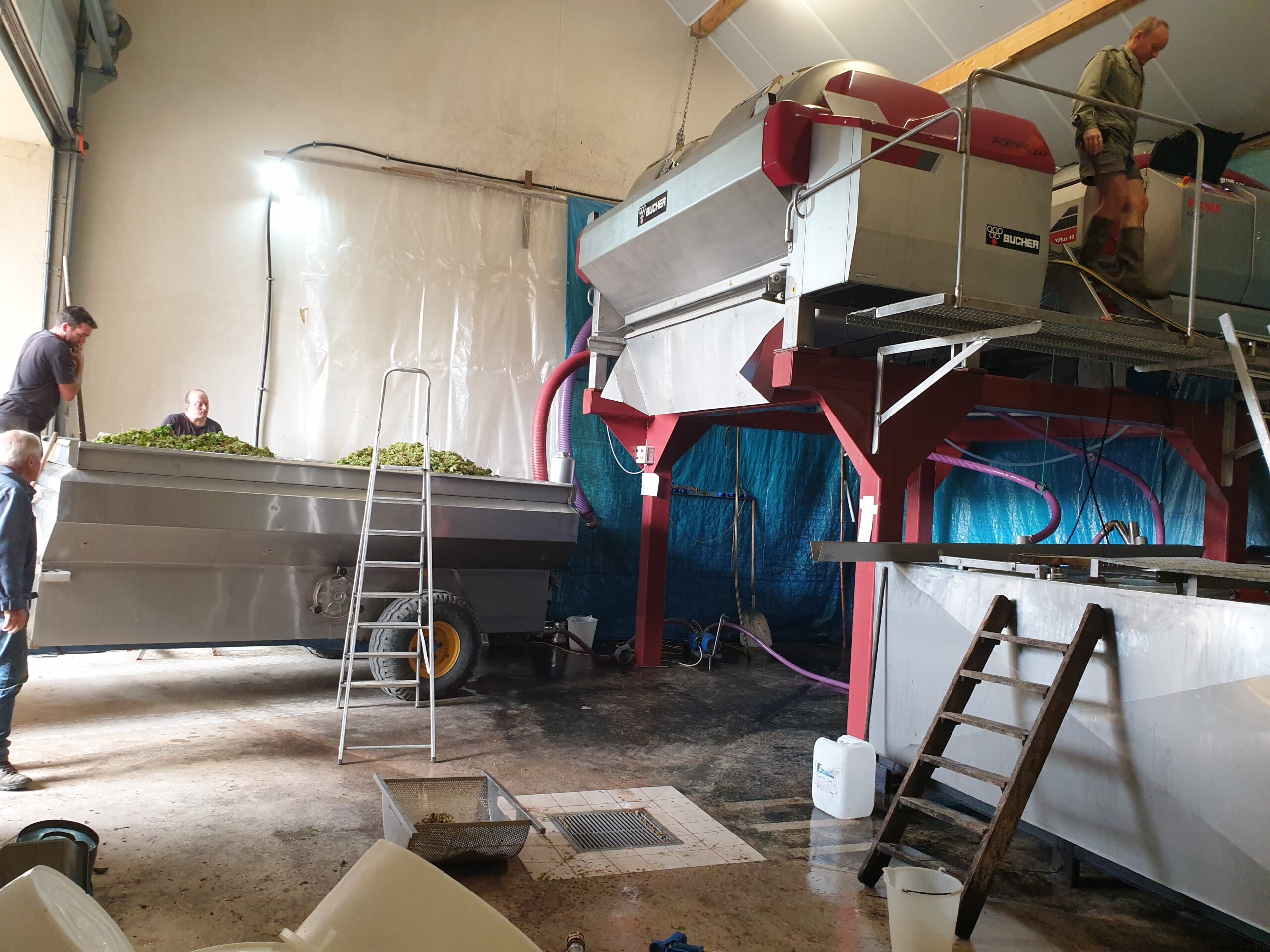
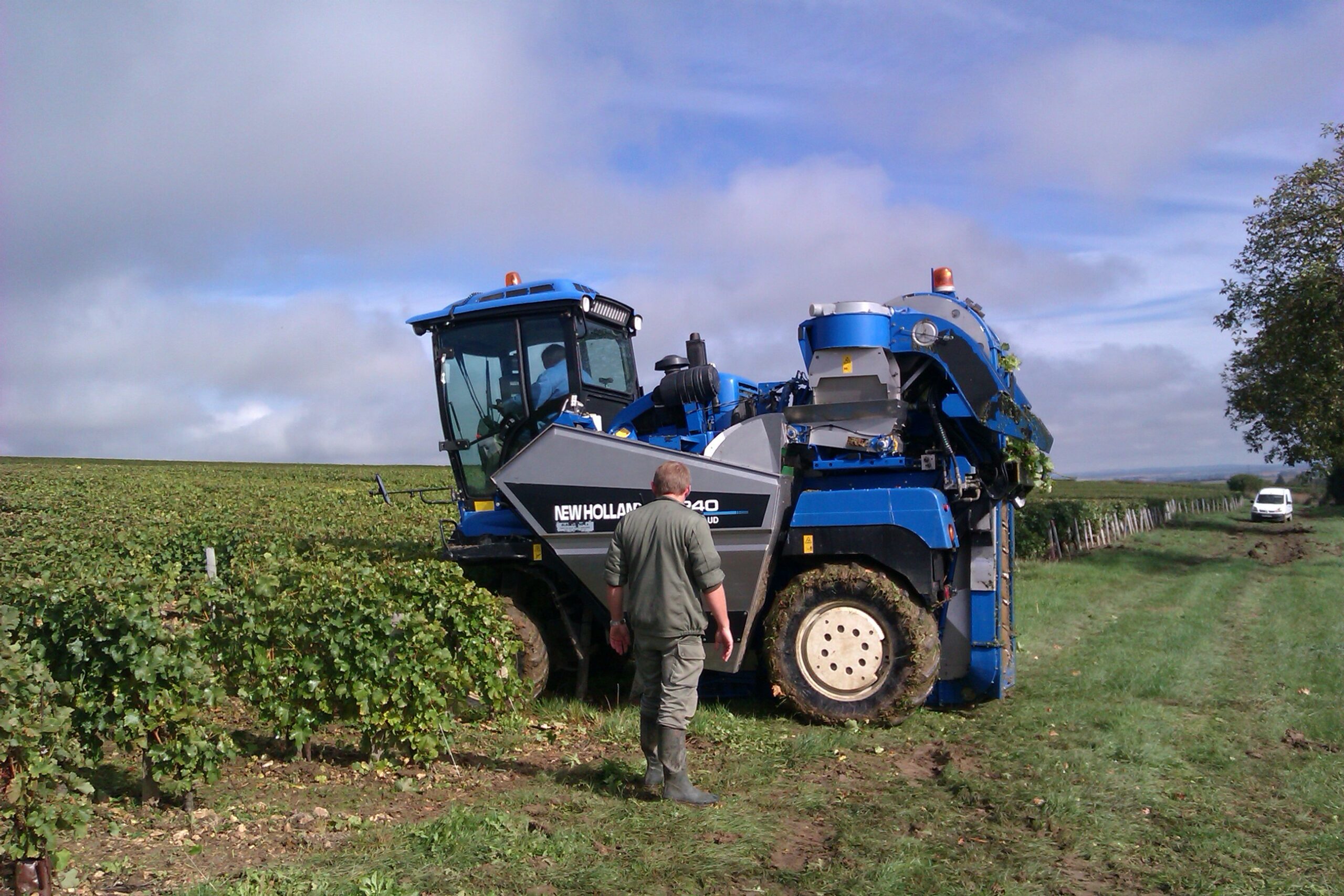
Traditionally carried out in September or October, the grape harvest is a crucial stage in the creation of a good wine. It is during this period that the winegrower reaps the fruits of the labor carried out throughout the year. At Riaux, before the harvest begins, Bertrand and Alexis systematically visit all the plots to taste and analyze the grapes in order to decide the chronological order in which each one will be harvested. After waiting for the ideal moment to start, once the decision has been made, efficiency is key and all the grapes are harvested in less than a week to be pneumatically pressed and distributed by terroir in vats to undergo cold stabilization. This means that the juice is kept for 4 to 6 days at 3°C on the lees before racking and the start of alcoholic fermentation (the conversion of sugar into alcohol by yeast).
At the end of the harvest, it is in the Cellar that the winemaking process begins!